What Should You Bring When Selling Coins in Vermilion Parish, Louisiana?
Key Takeaways
- Bring a valid, government-issued photo ID. Louisiana law requires precious metal and coin buyers to record seller identification for most transactions.
- Bring the coins in their current holders. Leave coins in slabs, flips, or albums rather than removing or reorganizing them before the visit.
- Bring any paperwork you have, such as grading certificates, receipts, or an inventory list. Documentation helps the evaluation move faster and gives context.
- Do not clean your coins. Cleaning can scratch surfaces and lower value, and buyers prefer to see coins in their original condition.
- Knowing what to expect during the evaluation, including how coins are examined and priced, helps you compare offers and make an informed decision.
Introduction
When selling coins in Vermilion Parish, you should bring a valid government-issued photo ID, your coins in the holders they are already stored in, and any paperwork you have, such as grading certificates, receipts, or an inventory list. Leave the coins uncleaned and in their original condition, since cleaning can lower their value.
Being prepared makes the whole process smoother. A clear record of what you own and the right identification help the evaluation move quickly and give you a solid basis for comparing offers. Business owners handling estate lots or accumulated inventory especially benefit from arriving organized, and knowing where local buyers operate in Vermilion Parish is a useful starting point.
Coin selling is more straightforward than many people expect once you know the terms. This guide walks through exactly what to bring and why each item matters, so you can prepare for a coin appraisal with confidence.
The Short Answer: Your Selling Checklist
If you want the quick version, here is what to gather before you go:
- A valid, government-issued photo ID
- All the coins you plan to sell, in their existing holders
- Grading certificates or authentication papers, if you have them
- Receipts or provenance records, if available
- A written inventory or list of the coins
- Nothing cleaned, polished, or altered
The sections below explain the reasoning behind each item so you understand what the buyer is looking for.
Valid Photo Identification
Identification is not optional. Louisiana law requires dealers who buy coins, bullion, and precious metals to record the seller's name and photo ID for most purchases, and often to hold the items for a set period before resale.
A driver's license, state ID card, or passport all work. The name on the ID should match the person completing the sale.
This requirement protects everyone. It creates a clear record of the transaction and helps deter the sale of stolen property. Treat it as a normal part of the process rather than an obstacle.
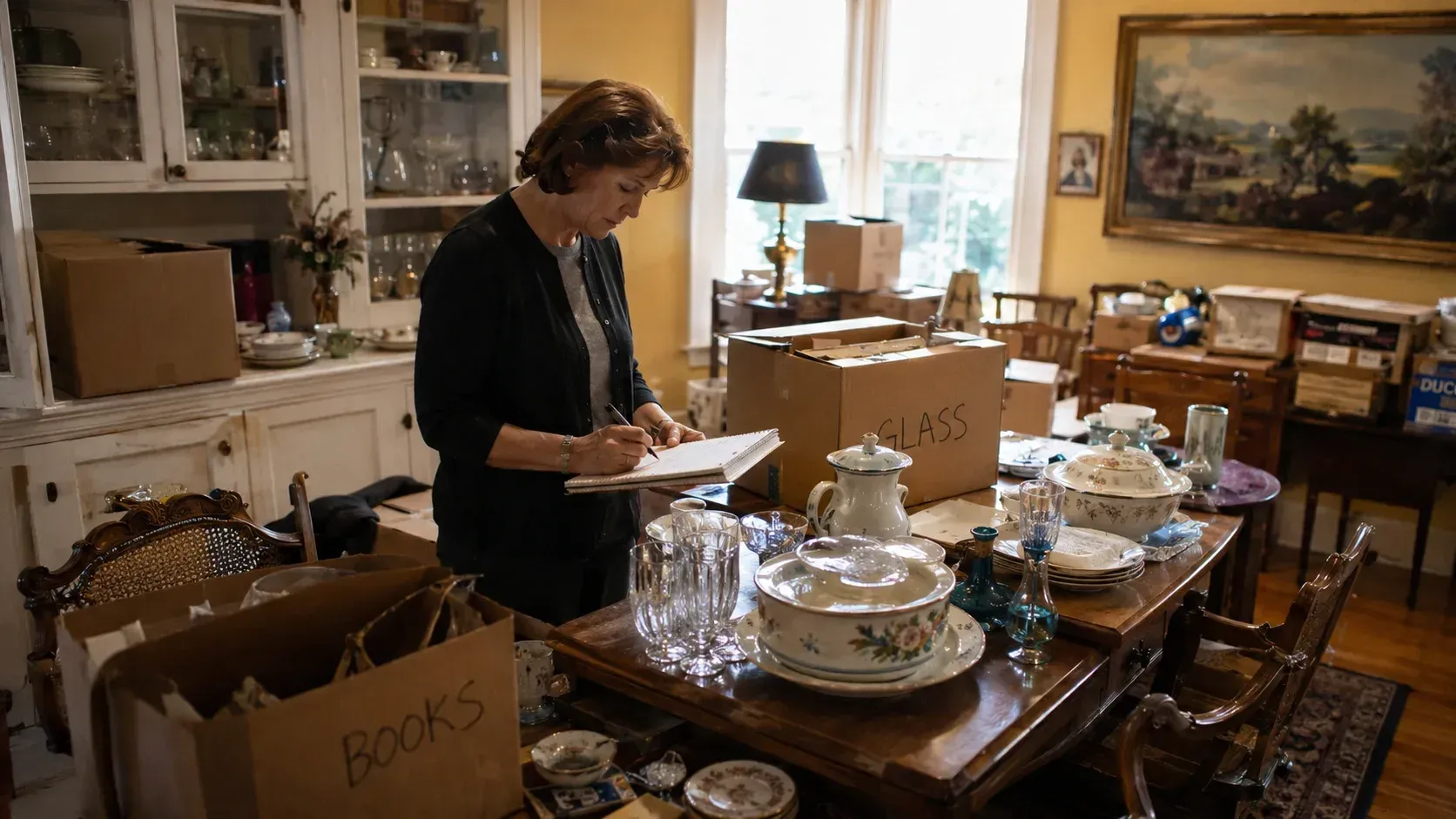
If you are selling on behalf of an estate or a business, bring documentation of your authority to sell, such as estate paperwork, along with your personal ID.
The Coins in Their Current Holders
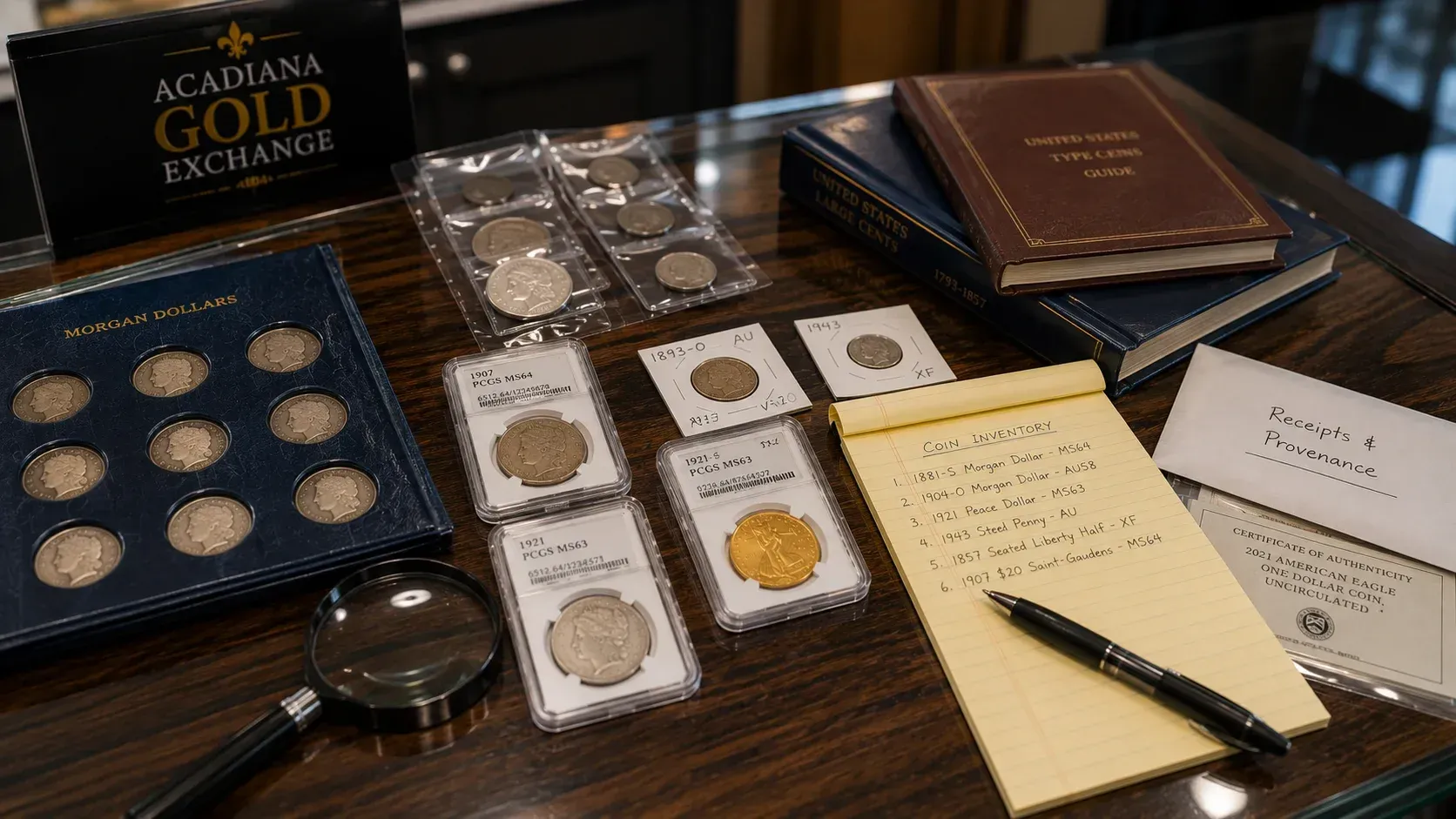
Bring your coins exactly as they are stored. If they are in graded slabs, keep them sealed. If they are in cardboard flips, plastic capsules, or albums, leave them there.
The holder itself carries information. A graded slab shows the grade and certification number, and original packaging can confirm authenticity or origin. Removing coins from this context makes the buyer's job harder and can risk damage.
Handle coins as little as possible. Fingerprints and oils from skin can mark a coin's surface over time, which is one reason collectors hold coins by the edges or leave them sealed.
Do not sort loose coins into new containers or rub them together in a bag. Keeping them separated and protected preserves both their condition and any story the packaging tells.
Documentation and Grading Certificates
Paperwork adds context and can speed things up. If any of your coins have been professionally graded, bring the certificates or note the certification numbers.
Grading from services like PCGS or NGC gives a buyer an independent read on a coin's condition and authenticity. This does not replace the buyer's own examination, but it provides a reference point both sides can discuss.
Receipts and provenance records help too. Knowing where and when a coin was acquired, or that it came from a known collection, can matter for rarer pieces. Learning how to recognize rare coins and their value beforehand helps you understand which of your pieces might warrant extra attention.
If you have no paperwork, that is fine. Plenty of coins are sold without it. Documentation is helpful, not mandatory, and a buyer will still examine and value each coin on its own.
An Inventory or Coin List
A simple written list is one of the most useful things you can bring. Note each coin's denomination, year, mint mark if visible, and any grading information.
This serves a few purposes. It gives you a personal record of what you brought in, helps you keep track during the evaluation, and makes it easier to compare offers from more than one buyer later.
For larger collections, an organized list saves considerable time. Instead of discovering each coin one at a time, the buyer can work through a known set of items in order.
You do not need special software. A handwritten sheet or a basic spreadsheet is enough. The point is having a clear account of what you own before anyone starts making offers.
Why You Should Not Clean Your Coins First
This is the mistake that costs sellers the most, so it deserves its own section. Do not clean, polish, or scrub your coins before selling them.
Cleaning almost always causes tiny scratches and removes the natural surface, called patina, that collectors value. A cleaned coin often sells for less than the same coin left untouched, and the damage cannot be undone. There are safe and unsafe ways to clean coins, and for coins you plan to sell, the safest approach is usually to leave them alone entirely. Even removing dirt gently can hurt value on collectible pieces. What looks like grime to an untrained eye may be original toning that a collector prefers.
If a coin is dirty, let the buyer see it as is. Professionals are used to examining coins in every condition and would rather assess the real surface than a cleaned one.
What to Expect During the Evaluation
Knowing the process removes a lot of uncertainty. A buyer will typically start by looking over your coins and your list, sorting them into common bullion or circulated pieces versus potentially collectible ones.
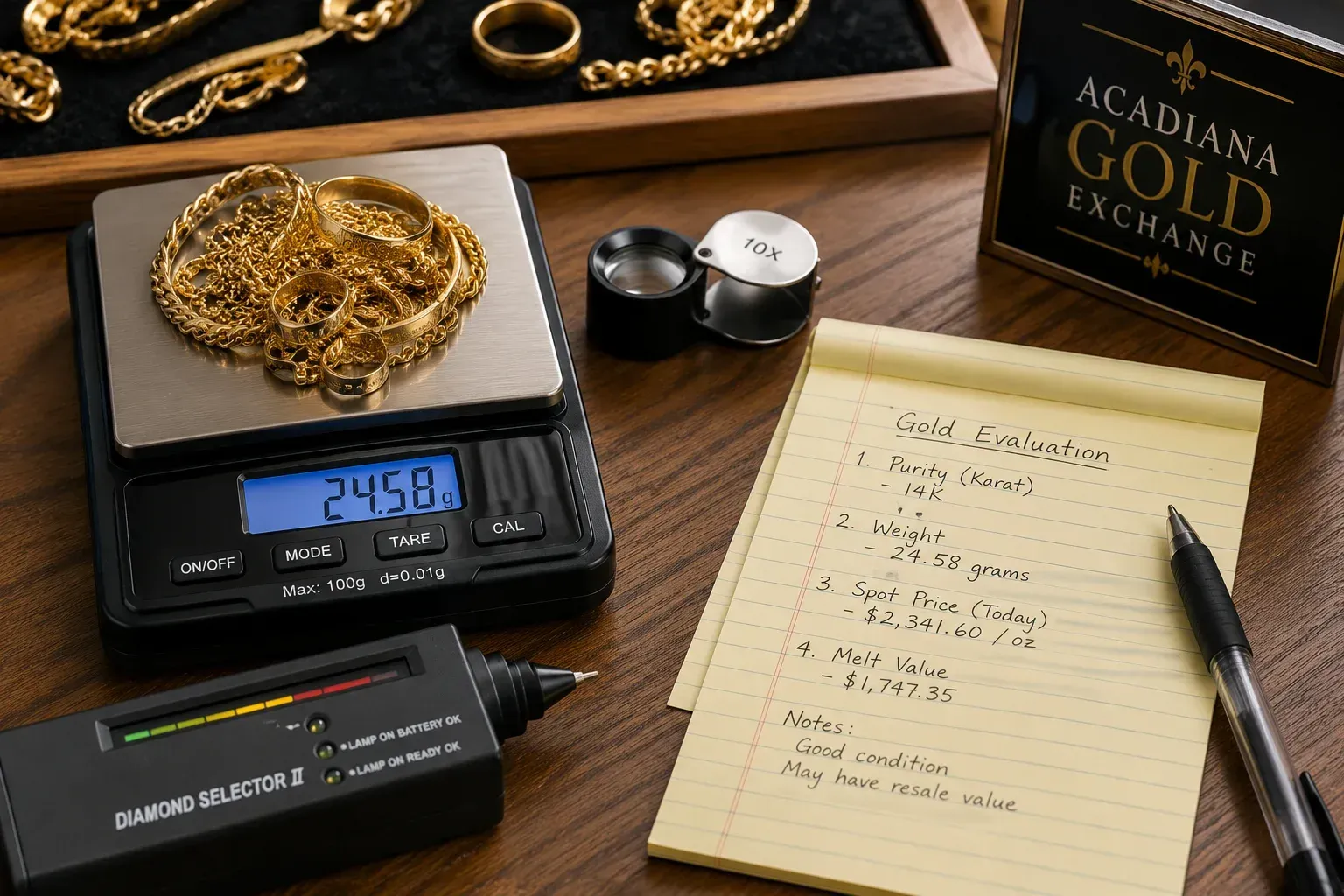
Each coin is then examined for date, mint mark, condition, and authenticity. Bullion and common coins are usually valued on metal content and the current market price, while collectible coins are assessed for their numismatic value, which can be higher than melt.
You should be able to watch this happen. A buyer who examines coins in the open and explains how they reach a number is following normal practice.
Ask questions as you go. Understanding why one coin is valued for its metal and another for its rarity helps you judge whether an offer makes sense for your particular coins.
Conclusion
Selling coins in Vermilion Parish goes more smoothly when you come prepared. Bring a valid photo ID, your coins in their existing holders, any grading certificates or receipts, and a written inventory, and leave the coins uncleaned and in their original condition.
Each item on that list serves a purpose, from meeting Louisiana's identification requirements to giving the buyer the context needed for an accurate evaluation. Preparation does not change what your coins are worth, but it helps you understand the process, keep track of your items, and compare offers so you can make a decision that fits your situation.
Ready to Find Out What Your Coins Are Worth?
If you have coins you are thinking about selling and want a clear, no-pressure evaluation, coming in prepared is the best first step. We examine each coin in the open and explain how we reach a number, so you understand exactly what you are looking at. Contact us at Acadiana Gold Exchange to ask questions or arrange a time to bring your collection in.
Frequently Asked Questions
Do I need ID to sell coins in Louisiana?
Yes. State law requires coin and precious metal buyers to record the seller's name and government-issued photo ID for most purchases, and often to hold items for a set period. A driver's license, state ID, or passport works.
Should I clean my coins before selling them?
No. Cleaning can scratch the surface and remove the natural patina collectors value, which often lowers the price. Buyers prefer to examine coins in their original, unaltered condition.
Do I need to know the value of my coins before selling?
It helps but is not required. A basic inventory list and a general sense of which coins might be collectible let you follow the evaluation and compare offers, but the buyer will examine and value each coin regardless.
What if my coins are not professionally graded?
That is common and not a problem. Grading certificates add helpful context, but buyers examine and assess ungraded coins as a normal part of the process. Bring whatever paperwork you have, and do not worry if you have none.
Can I sell coins from an inherited collection?
Yes. Bring your personal photo ID along with any estate documentation showing your authority to sell. Inherited collections often mix common and collectible coins, so an item-by-item evaluation is useful.
Are old coins always worth more than newer ones?
Not necessarily. Age is only one factor. Rarity, mint mark, condition, and demand often matter more, and some newer coins can be more valuable than older, common ones. Each coin is assessed on its own.
How are coin values determined during an evaluation?
Common and bullion coins are usually valued on metal content and the current market price. Collectible coins are assessed for numismatic value based on rarity, condition, and demand, which can exceed melt value.
Related Posts