What Should You Expect During an Estate Sale in Lafayette Parish, Louisiana?

Table of Contents
- What Happens During an Estate Sale?
- The Timeline: From First Call to Final Cleanup
- How Items Get Priced
- Estate Sale vs. Other Ways to Sell
- Conclusion
- Have Questions About Selling Estate Items in Lafayette?
- Frequently Asked Questions
Key Takeaways
- An estate sale is an organized, multi-day event where most of a household's or business's contents are sold to the public, usually run by a professional company that prices, stages, staffs, and manages the sale.
- Expect a process that runs one to three weeks from first consultation to cleanup, with the actual public sale typically lasting two to three days over a weekend.
- Companies generally work on commission, often in the range of 30 to 50 percent of gross sales, with terms that vary by company, contract, and the value of the estate.
- Pricing reflects resale market value, not original cost or sentimental value, and high-value items like gold, jewelry, coins, and watches are often appraised or handled separately.
- Louisiana has specific rules around succession, sales tax collection, and permits that can affect an estate sale, so confirming the legal details for your situation matters before you begin.
Introduction
During an estate sale in Lafayette Parish, you should expect a professionally organized event where the contents of a home or business are priced, displayed, and sold to the public over several days, typically managed by a company that handles everything from sorting and staging to staffing and final cleanup. Most sellers hire a company that works on commission, and the process usually runs one to three weeks from the first meeting to the end of the sale. If you are weighing this route, it helps to understand how professional estate sale services in the Lafayette area structure the work before you sign anything.
Knowing what to expect matters because an estate sale involves real decisions with financial and legal weight. Whether you are settling a family member's estate, downsizing a business, or liquidating inventory, your choices about pricing, contracts, and which items to sell separately affect what you walk away with. This article explains the process step by step, what a company does and charges, how items are priced, and where local Louisiana rules come into play.
What Happens During an Estate Sale?
An estate sale is a public, on-site sale where most of the personal property in a home or business is sold over a set number of days, usually organized and run by a professional estate sale company that prices and stages the items, markets the event, staffs the sale, and manages transactions.
Unlike a garage sale, an estate sale usually involves the entire contents of a property, including furniture, appliances, tools, collectibles, jewelry, and everyday household goods. The scale is larger and the organization more formal.
Most estate sales happen because of a life transition. Common triggers include the death of a family member, a move to assisted living, downsizing, divorce, or a business closing and needing to clear inventory and fixtures.
The public walks through the property during posted hours and buys items directly. Prices are usually marked, and many sales use discount schedules that lower prices on later days to move remaining stock.
The Timeline: From First Call to Final Cleanup
Estate sales follow a fairly predictable arc, though the exact length depends on the size of the estate and the company's schedule.
Consultation. A company representative visits the property, reviews the contents, and discusses whether an estate sale makes sense. This is when you learn their commission, terms, and rough expectations.
Contract and planning. If you move forward, you sign an agreement covering commission, dates, responsibilities, and how leftover items are handled. Read it carefully, since terms vary widely between companies.
Sorting and staging. Staff sort, clean, organize, and display items over several days, arranging rooms so buyers can move through easily.
Research and pricing. Items are researched and priced against current resale values. Higher-value pieces may be appraised or set aside for specialist handling.
Marketing. The company advertises through estate sale listing sites, social media, email lists, and signage. Stronger marketing draws more buyers, which affects results.
The sale. The public sale usually runs two to three days, often Friday through Sunday. Staff manage entry, answer questions, handle payments, and provide security, since an advertised sale invites strangers into the property. Established companies also draw on mailing lists of regular buyers and dealers, which can lift turnout. If fair pricing and protecting valuables concern you, it helps to know how to spot the scams and overpriced items that appear at poorly run sales.
Settlement and cleanup. After the sale, the company tallies gross sales, subtracts its commission and agreed fees, and pays the balance. Many also offer or arrange cleanout of unsold items, sometimes at added cost.
How Items Get Priced
Estate sale items are priced at their current resale or secondhand market value, which reflects what buyers will realistically pay today, not the original purchase price or the item's sentimental worth to the family.
This surprises many first-time sellers. A dining set that cost several thousand dollars new may sell for a few hundred, because used furniture markets are soft and buyers expect estate sale discounts.
Pricers research comparable sales, check current demand, and factor in condition, brand, age, and rarity. Common household goods are priced to move, while genuinely collectible or valuable pieces get closer attention.
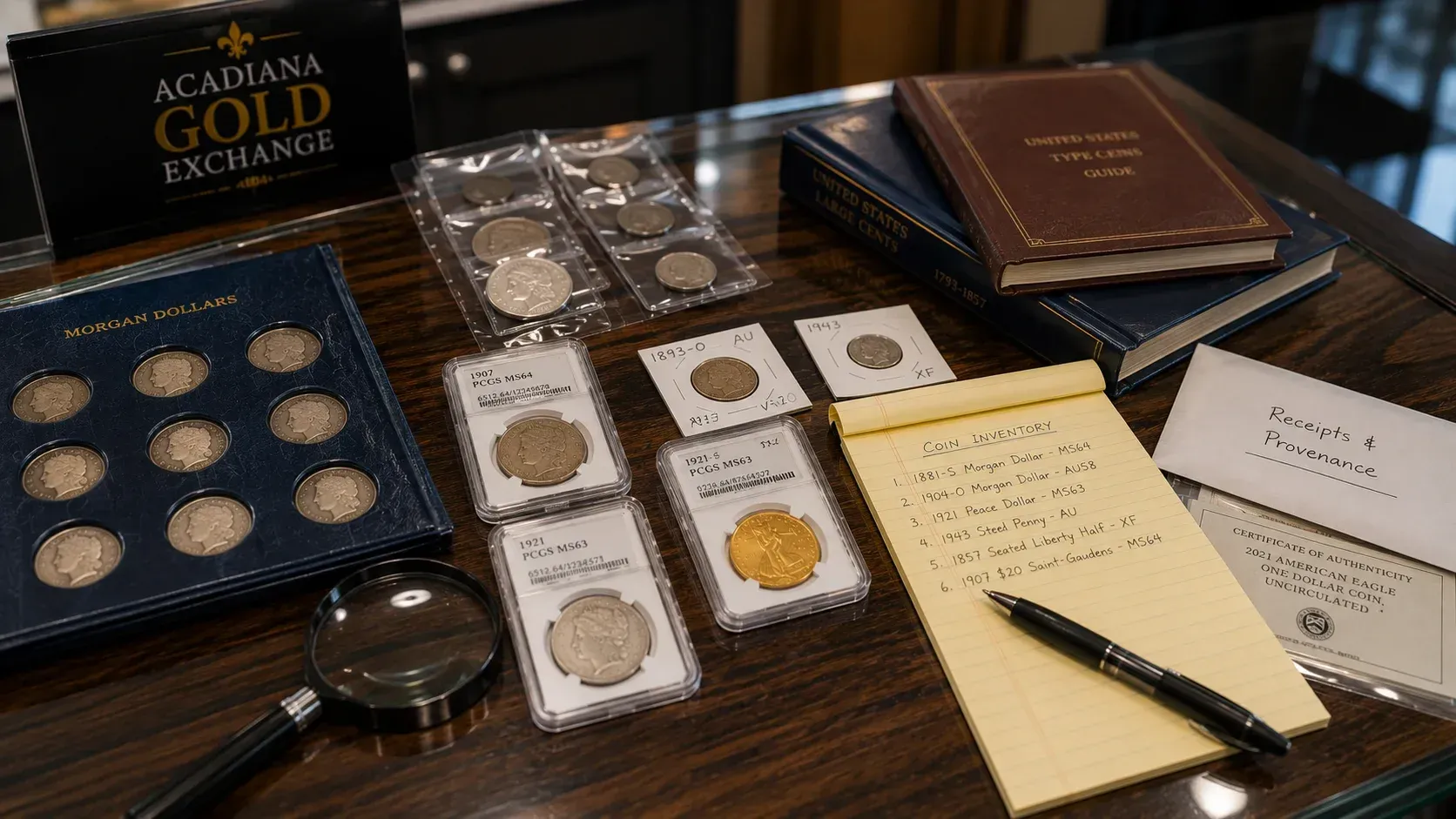
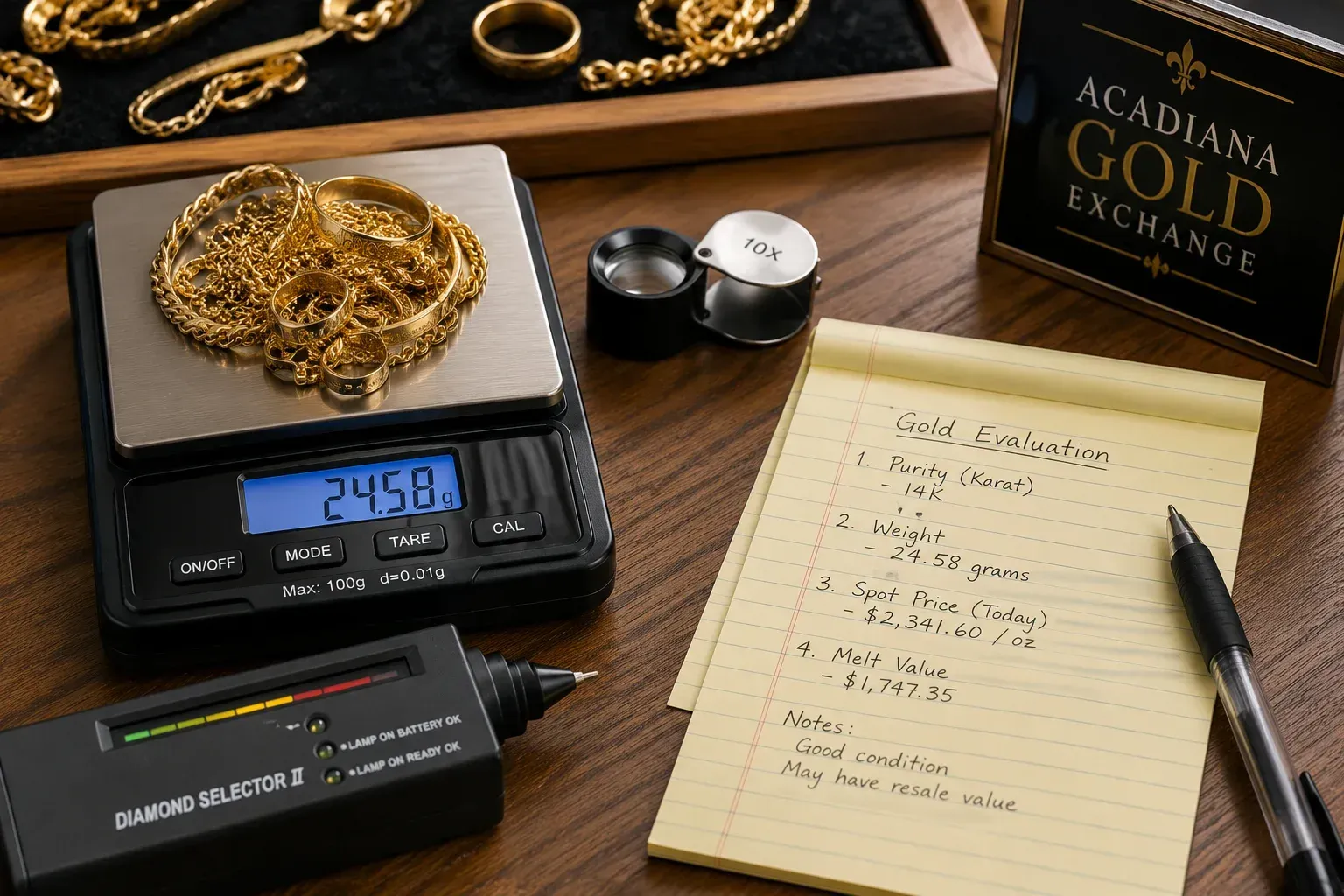
Precious metals, jewelry, coins, and watches are a special case. These carry real market value tied to metal content or collector demand, and their worth is not obvious from appearance alone. Many families have these items appraised separately rather than letting them go at general-sale prices. If your estate includes gold or jewelry, understanding how to know what your gold is worth before the sale helps you avoid underpricing pieces that deserve individual evaluation.
Staying aware of broader shifts also helps, since demand for certain categories moves over time. Following current estate sale trends gives sellers a sense of what buyers are actively seeking.
Estate Sale vs. Other Ways to Sell
An estate sale is one option among several, and the right choice depends on your timeline, the type of items, and how much effort you want to spend. Here is a simple way to compare the common routes.
| Factor | Estate Sale | Consignment | Direct Sale to a Buyer | Auction |
|---|---|---|---|---|
| Best for | Whole households, mixed items | Selected higher-value items | Gold, coins, jewelry, quick cash | Collectibles, rare pieces |
| Speed | Days, after 1-3 weeks of prep | Weeks to months | Same day, often | Set auction date |
| Effort for you | Low, company handles it | Low to moderate | Low | Low to moderate |
| Typical cost | 30-50% commission | Percentage per item sold | Buyer's margin built in | Buyer's premium and seller fees |
| Control over price | Moderate | Moderate | Direct negotiation | Market decides |
For a mix of items filling a whole property, an estate sale is often the practical choice. For a smaller number of higher-value pieces, consignment can be a better fit, and it is worth understanding how consignment works as an alternative or complement to a full sale.
For gold, jewelry, coins, and watches specifically, selling directly to a specialist buyer often makes more sense than including them in a general estate sale, because these items are valued on measurable factors rather than foot traffic.
Conclusion
An estate sale in Lafayette Parish is an organized, professionally managed event that turns the contents of a home or business into sales over a few days, following a process that runs one to three weeks from consultation to cleanup. Expect a company to price items at resale value, stage and market the sale, staff it, and take a commission that typically falls between 30 and 50 percent, with the full fee structure and leftover-item terms spelled out in a contract you should read closely.
The clearest outcomes tend to come from matching each part of the estate to the right approach: household goods through the sale itself, and measurable-value items like gold, coins, jewelry, and watches through separate appraisal. Understanding pricing realities, comparing contracts on total terms, and confirming the Louisiana legal steps that apply put you in a strong position to make an informed decision, whether you are planning a sale or attending one.
Have Questions About Selling Estate Items in Lafayette?
If your estate includes gold, jewelry, coins, or watches and you want to understand what those specific pieces are worth before or alongside an estate sale, a clear, no-pressure evaluation can help you decide the best path. We examine items in the open and explain how we reach a value, so you can weigh your options with real information.
Reach out to our team at Acadiana Gold Exchange in Lafayette, LA, to ask questions or arrange a time to bring pieces in.
Frequently Asked Questions
How long does an estate sale take from start to finish?
Most estate sales run one to three weeks from the first consultation to final cleanup. The public sale itself usually lasts two to three days, often over a weekend. The exact timeline depends on the size of the estate and the company's schedule.
How much do estate sale companies charge in Louisiana?
Estate sale companies typically charge a commission on gross sales, often in the 30 to 50 percent range. Some also add fees for advertising, staffing, or cleanout. Terms vary by company and contract, so compare the full fee structure, not just the rate.
Should I sell gold, coins, or jewelry at an estate sale?
These items are valued on metal content or collector demand, not foot traffic, so they can be underpriced in a general sale. Many families have them appraised and sold separately to ensure the value reflects the actual market for each piece.
What happens to items that do not sell?
Unsold items are handled according to your contract. Options may include donation, a buyout by the company, disposal, or leaving them with the seller. Settle this before the sale, since cleanout terms and any added costs vary between companies.
Do I need to settle succession before an estate sale in Louisiana?
Selling a deceased person's property often involves Louisiana's succession process, and timing can depend on it. Because rules vary by situation, confirm the legal steps with an attorney or the parish before scheduling a sale rather than assuming.
Related Posts