How Is the Value of Gold Jewelry Determined in Lafayette, Louisiana?
Key Takeaways
- Gold jewelry value comes down to four main factors: purity (karat), weight, the current market price of gold, and the condition or resale appeal of the piece.
- Purity is measured in karats. 24K is pure gold, while 14K and 10K contain other metals, so a heavier piece is not always worth more than a lighter, higher-karat one.
- The daily spot price of gold sets the baseline. Because it changes constantly, two offers made a week apart can differ even for the same item.
- Most scrap and broken gold is valued by melt weight, but intact designer, antique, or gem-set pieces may be worth more sold as jewelry than melted down.
- A clear evaluation involves testing purity, weighing on a calibrated scale, and applying the current price. Knowing the process helps you prepare and compare offers.
Introduction
The value of gold jewelry is determined by four things: how pure the gold is, how much it weighs, the current market price of gold, and the condition of the piece. A buyer tests the karat, weighs the item on a calibrated scale, checks that day's gold price, and works out what the metal is worth, then considers whether the piece is worth more as jewelry than as scrap.
Understanding that math matters before you sell anything. Whether you are clearing out a single ring or a box of estate pieces, knowing what drives the number protects you from lowball offers and helps you compare buyers fairly. For business owners handling inventory or inherited lots, it is the difference between a guess and an informed decision about your gold worth.
Gold buying is regulated and fairly transparent once you know the terms. The rest of this guide breaks down each factor so you can walk into any evaluation in Lafayette knowing what the person across the counter is actually measuring.
The Four Factors That Set Gold Value
Every honest gold valuation rests on the same four inputs. Purity tells you what fraction of the item is actual gold. Weight tells you how much material there is. The market price sets the dollar value of that gold on a given day. Condition decides whether the piece is worth more whole or melted.
Change any one of these and the number changes. That is why a small, high-karat ring can outvalue a large, low-karat chain, and why the same piece can be quoted differently on a Monday than on a Friday.
The rest is arithmetic. Once a buyer has those four pieces of information, the melt value is a straightforward calculation, and any premium for design gets added on top.
Gold Purity and Karat Explained
Karat measures how much of a piece is pure gold, on a scale of 24. Pure gold is soft, so jewelry mixes in other metals like copper and silver for strength.
Here is what the common marks mean:
- 24K is 99.9 percent gold
- 18K is 75 percent gold
- 14K is 58.5 percent gold
- 10K is 41.7 percent gold, the legal minimum to be called gold in the US
Most jewelry carries a stamp showing its karat, often inside a ring band or on a clasp. You may see numbers like 585 (14K) or 750 (18K) instead of the karat mark.
A stamp is a starting point, not proof. Marks can be worn, missing, or occasionally false, so a buyer confirms purity with an acid test, an electronic tester, or X-ray fluorescence before making an offer.
Why Weight Is Measured So Carefully
Gold is priced by weight, usually in grams or pennyweights, so the scale is central to any valuation. A reputable buyer uses a scale that is calibrated and often certified for trade use.
Only the gold counts. Stones, clasps made of other metal, and non-gold components are subtracted or weighed separately, since you are being paid for gold content, not total mass.
This is where purity and weight work together. Ten grams of 10K gold contains far less actual gold than ten grams of 18K, even though the scale reads the same. The final figure always combines both numbers.
Ask to see the weight on the display. Watching the piece weighed in front of you is a normal, reasonable request at any transparent evaluation.
How the Daily Gold Price Works
Gold trades on global markets, and its price moves throughout the day. This live figure, called the spot price, is the baseline every buyer starts from.
Because it shifts constantly, quotes have a short shelf life. An offer based on Tuesday's price may not hold the following week, which explains why the same gold prices fluctuate from one visit to the next. Currency values, interest rates, and global events all push the number around.
Buyers do not pay the full spot price for scrap gold. They pay a percentage of it, keeping a margin to cover refining, testing, overhead, and profit. That is standard across the industry, and the percentage is a fair thing to ask about and compare between buyers.
For larger sales, timing can matter. Some sellers watch the market and choose a day when prices are higher, though no one can predict where the price will go next.
Condition, Craftsmanship, and Resale Value
Not all gold is valued the same way. Broken chains, single earrings, and dated pieces are usually bought for melt value, meaning the gold content is all that counts.
Intact pieces can be different. A well-made designer item, an antique with historical interest, or a ring with quality gemstones may be worth more sold as jewelry than melted. In those cases a buyer weighs the resale market against the melt figure and offers based on whichever is higher, which is why it helps to know what a shop typically buys and sells before you decide.
Gemstones are assessed separately. Diamonds and colored stones have their own value, and the gold is figured on its own once the stones are accounted for. A piece with real stones deserves an evaluation that looks at both.
Condition also affects resale pieces. Scratches, repairs, and heavy wear lower what a piece brings on the secondhand market, though they rarely matter for gold sold as scrap.
How a Gold Evaluation Actually Happens
A typical evaluation follows a clear sequence, and there is nothing mysterious about it. First the buyer inspects the piece and looks for karat stamps and maker's marks.
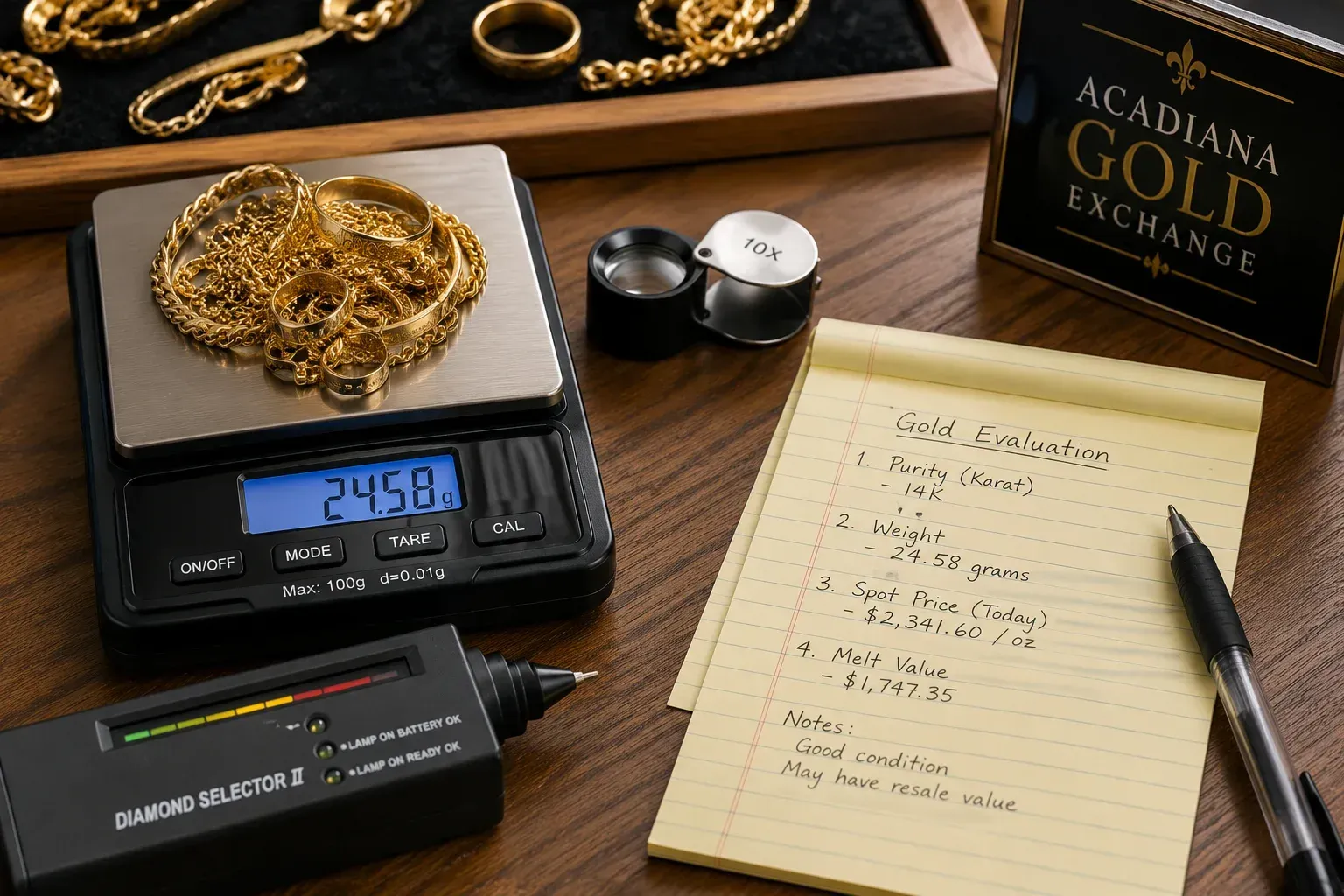
Next comes testing. The buyer confirms purity using acid, an electronic tester, or XRF, since the stamp alone is not enough. Then the piece is weighed on a calibrated scale, with non-gold parts separated out.
With purity, weight, and the day's price in hand, the buyer calculates the metal value and applies their buying percentage. If the piece has resale or gemstone value, that is added or considered instead of melt.
You should be able to watch each step. A buyer who tests and weighs in the open, and who explains the numbers, is following normal practice. Anyone unwilling to show their work is worth being cautious about.
How to Prepare Before You Sell or Appraise
A little preparation puts you in a stronger position. Sort your items by karat if you can read the stamps, and set aside anything that looks like a designer, antique, or gem-set piece for separate evaluation.
Weigh your gold at home on a kitchen or jewelry scale for a rough idea, and check the current price of gold per gram online the same day. This will not match an offer exactly, since buyers pay a percentage, but it tells you the ballpark.
Getting more than one evaluation is reasonable and common. Offers vary between buyers, and comparing a few helps you understand the range for your particular items.
Finally, bring a photo ID. Louisiana law requires gold buyers to record seller identification and hold certain purchases for a set period, which is a consumer protection measure, not a hassle to worry about.
Conclusion
The value of gold jewelry in Lafayette comes from purity, weight, the daily market price, and condition. Purity and weight together determine how much actual gold you have, the spot price sets what that gold is worth on a given day, and condition decides whether a piece sells for melt or for more as jewelry.
Knowing these factors turns a confusing transaction into a clear one. You can read your own karat stamps, estimate weight, check the day's price, and ask a buyer to test and weigh in front of you. An informed seller who understands the process is in the best position to recognize a fair offer and make a decision with confidence.
Curious What Your Gold Is Actually Worth Today?
If you have gold jewelry you are thinking about selling or simply want evaluated, a clear, no-pressure assessment can tell you where you stand before you decide anything. We will test, weigh, and explain the numbers so you understand exactly how the value was reached. Contact us at Acadiana Gold Exchange in Lafayette, LA, for a straightforward look at your pieces.
Frequently Asked Questions
How is the value of gold jewelry calculated?
Value is based on the gold's purity (karat), its weight, and the current market price of gold. A buyer multiplies the pure gold content by the price per gram, then applies a buying percentage. Pieces with resale or gemstone value may be worth more than melt.
Does the karat stamp guarantee the gold content?
No. A stamp is a useful indicator, but it can be worn, missing, or occasionally inaccurate. Reputable buyers confirm purity with an acid test, electronic tester, or X-ray fluorescence before quoting a price.
Will I get the full spot price for my gold?
No. Buyers pay a percentage of the spot price and keep a margin to cover refining, testing, and overhead. The percentage varies between buyers, so it is reasonable to ask about it and compare.
Is my gold worth more as jewelry or as scrap?
It depends on the piece. Broken or common items are usually valued for melt. Designer, antique, or quality gem-set pieces may bring more sold as jewelry, so those are worth having evaluated on both bases.
Should I clean my gold jewelry before an evaluation?
Gentle cleaning to remove dirt is fine, but it does not change the gold content or the value. Avoid harsh chemicals or heavy polishing, especially on pieces with stones or antique finishes.
Do I need identification to sell gold in Louisiana?
Yes. State law requires gold and precious metal buyers to record seller identification and often to hold purchases for a set period. Bringing a valid photo ID is a normal part of the process.
Why did two buyers quote different prices for the same item?
Differences usually come from the buying percentage each applies, the gold price at the moment of the quote, and whether one buyer sees resale value the other does not. Comparing a few evaluations helps you understand the range.
Related Posts