How Should You Store Fine Jewelry and Watches During Louisiana's Humid Summer Months?
Key Takeaways
- Humidity is the main threat to stored jewelry in Louisiana. Moisture in the air speeds up tarnish on silver, corrodes base-metal components, and can work its way into watch cases.
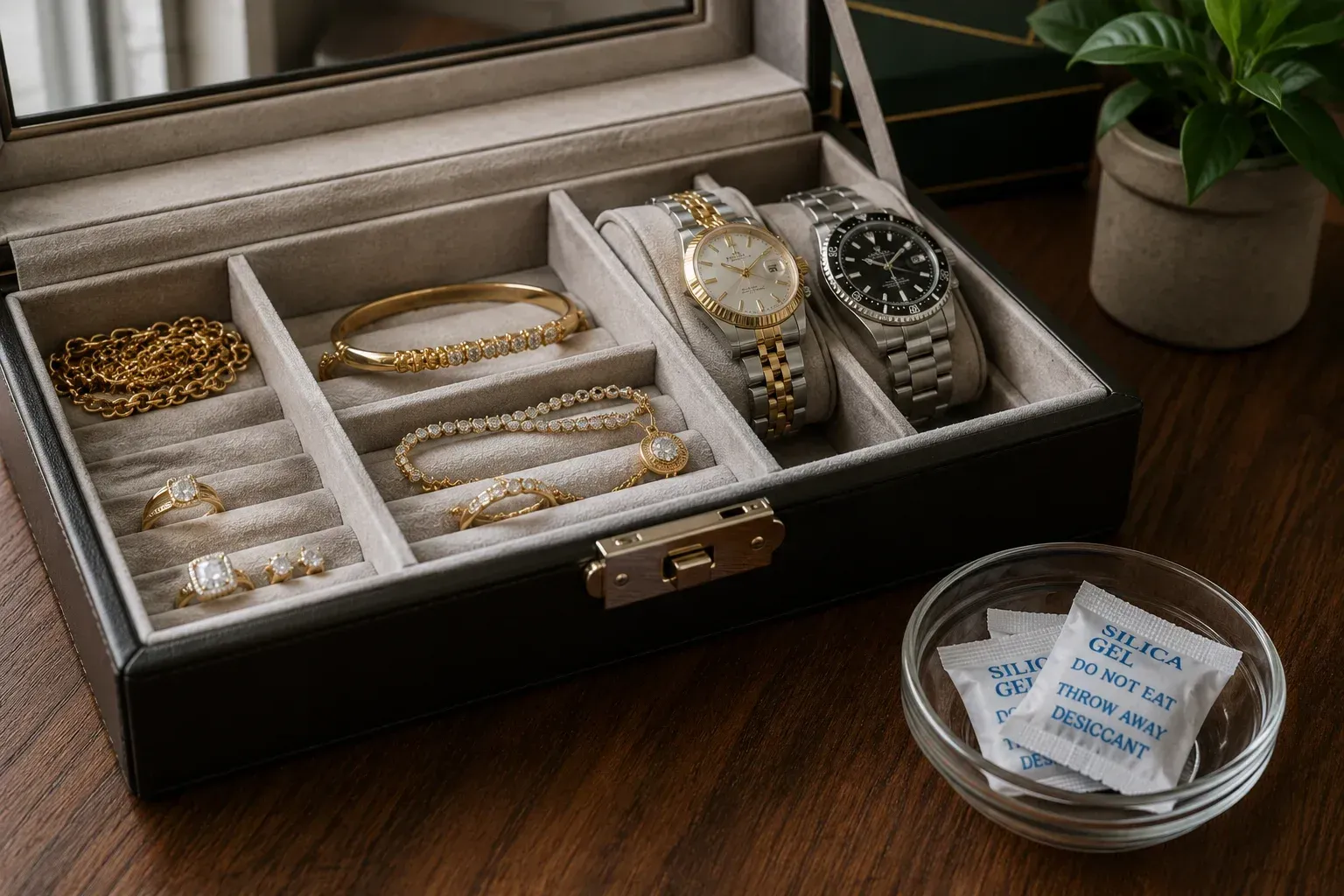
- The safest storage spot is a cool, dry, climate-controlled room, ideally inside a closed box or case with silica gel packets or anti-tarnish strips.
- Bathrooms, attics, garages, and cars are the worst places to keep fine pieces during a Gulf Coast summer because of heat swings and trapped moisture.
- Watches need extra attention. Aging gaskets lose their seal, and condensation inside a case can damage the movement and dial before you notice anything from the outside.
- Storage slows damage but does not stop time. Periodic professional inspection catches worn seals, loose stones, and early corrosion while repairs are still simple.
Table of Contents
- Why Louisiana Humidity Is Hard on Jewelry and Watches
- How Moisture Affects Different Metals
- What Humidity Does to Gemstones and Settings
- Watches: The Most Humidity-Sensitive Pieces You Own
- Where to Store Jewelry During the Summer
- Storage Materials That Help
- Habits That Do the Rest
- Conclusion
Introduction
Fine jewelry and watches should be stored in a cool, dry, climate-controlled space, kept in closed boxes or cases with a desiccant such as silica gel, and separated so pieces do not scratch each other. In a Louisiana summer, where outdoor humidity sits above 90 percent most mornings, the goal is simple: keep moisture away from metal, stones, and watch movements.
That takes some deliberate effort here. Lafayette summers push heat and moisture into every uncooled corner of a home or business, and jewelry left in the wrong drawer for three months can come out tarnished, hazy, or worse. For business owners holding inventory, estate pieces, or trade-in stock, storage conditions directly affect what those items are worth later.
The physics behind the damage is worth understanding, because it explains which storage habits matter and which are wasted effort. Everything from sterling flatware to the fine watches that pass through our Lafayette shop responds to humidity in predictable ways, and predictable problems are preventable ones.
Why Louisiana Humidity Is Hard on Jewelry and Watches
Two things make Gulf Coast summers rough on stored valuables: sustained moisture and temperature swings. Warm air holds more water, and when that air cools, even slightly, the water condenses onto whatever surface is nearby.
That cycle repeats daily in uncooled spaces. A garage that hits 95 degrees in the afternoon and drops to 78 overnight is running a condensation machine, and anything metal inside it collects a fine layer of moisture again and again.
Air conditioning helps a lot, but it does not fix everything. Indoor humidity in South Louisiana often stays in the 55 to 65 percent range even with the AC running, which is still high enough to tarnish silver over a season.
How Moisture Affects Different Metals
Metals react to humid air at very different speeds, so it helps to know what you actually have in the drawer.
Sterling silver
Silver tarnishes fastest. Humid air carries traces of sulfur compounds, and they react with silver to form the familiar yellow-to-black film. Sterling is 92.5 percent silver with copper making up most of the rest, and that copper adds its own dull corrosion. The types of silver differ in how quickly this happens, but none of them are immune.
Gold
Pure gold does not tarnish, but almost no jewelry is pure gold. The copper, silver, and nickel alloyed into 10K and 14K pieces can react with moisture and skin oils, leaving dark spots or a slight haze. Higher karat gold holds up better in humid storage.
Platinum
Platinum is the least reactive of the common jewelry metals and handles humidity well. Its weak point is not the metal itself but any steel springs, clasps, or screws attached to it.
Plated and base metals
Costume and plated pieces suffer most. Once moisture reaches the base metal through thin or worn plating, corrosion spreads underneath and the finish flakes. If you store fine and fashion pieces together, corrosion products from a base-metal item can even transfer to neighbors touching it.
What Humidity Does to Gemstones and Settings
Most gemstones themselves shrug off humidity. Diamonds, sapphires, and rubies are not harmed by moisture in the air.
The risk sits in the settings and in a handful of sensitive materials. Moisture corrodes the solder joints and prong bases that hold stones in place, and a weakened prong is how stones get lost. Pearls and opals are the exceptions on the stone side: pearls are organic and damaged by both extremes, while opals contain water and can craze if stored somewhere hot and dry, such as near a dehumidifier outlet.
Foil-backed stones in antique pieces deserve special mention. Moisture that reaches the foil clouds it permanently, and there is no polishing that back.
Watches: The Most Humidity-Sensitive Pieces You Own
A mechanical watch is a sealed machine, and the seal is the whole game. Rubber gaskets at the caseback, crown, and crystal keep moisture out, but gaskets dry out and shrink with age, usually within three to five years.
Once humid air gets inside a case, trouble compounds quietly. Condensation forms on the inside of the crystal during temperature swings, and that moisture rusts steel movement parts, spots the dial, and degrades the lubricants. By the time fog is visible under the crystal, water has been inside for a while.
Storage habits that help: keep watches in a lined box in a climate-controlled room, leave the crown fully pushed in or screwed down, and avoid winding or setting a watch with damp hands. For pieces you rarely wear, a pressure test during routine service confirms the gaskets still seal.
Quartz watches are not exempt. Moisture corrodes battery contacts and circuit boards, and a leaking battery in a humid case makes the damage worse.
Where to Store Jewelry During the Summer
Location matters more than any product you can buy. The best spot is an interior room that stays air conditioned around the clock: a bedroom closet, an interior office, or a dedicated safe in conditioned space.
Avoid these, especially from May through September:
- Bathrooms. Shower steam sends humidity to 100 percent daily. This is the single most common storage mistake.
- Attics and garages. Extreme heat plus daily temperature swings equals constant condensation.
- Exterior walls and windowsills. Temperature changes along outside walls encourage moisture to settle.
- Vehicles. A glovebox in a Louisiana parking lot can pass 130 degrees, which dries gaskets and can loosen glue-set stones.
Bank safe deposit boxes are a reasonable option for pieces you rarely wear, since bank vaults are climate controlled. Just note that boxes are not humidity controlled to museum standards, so desiccant packets still earn their place inside.
Storage Materials That Help
A few inexpensive supplies do most of the work:
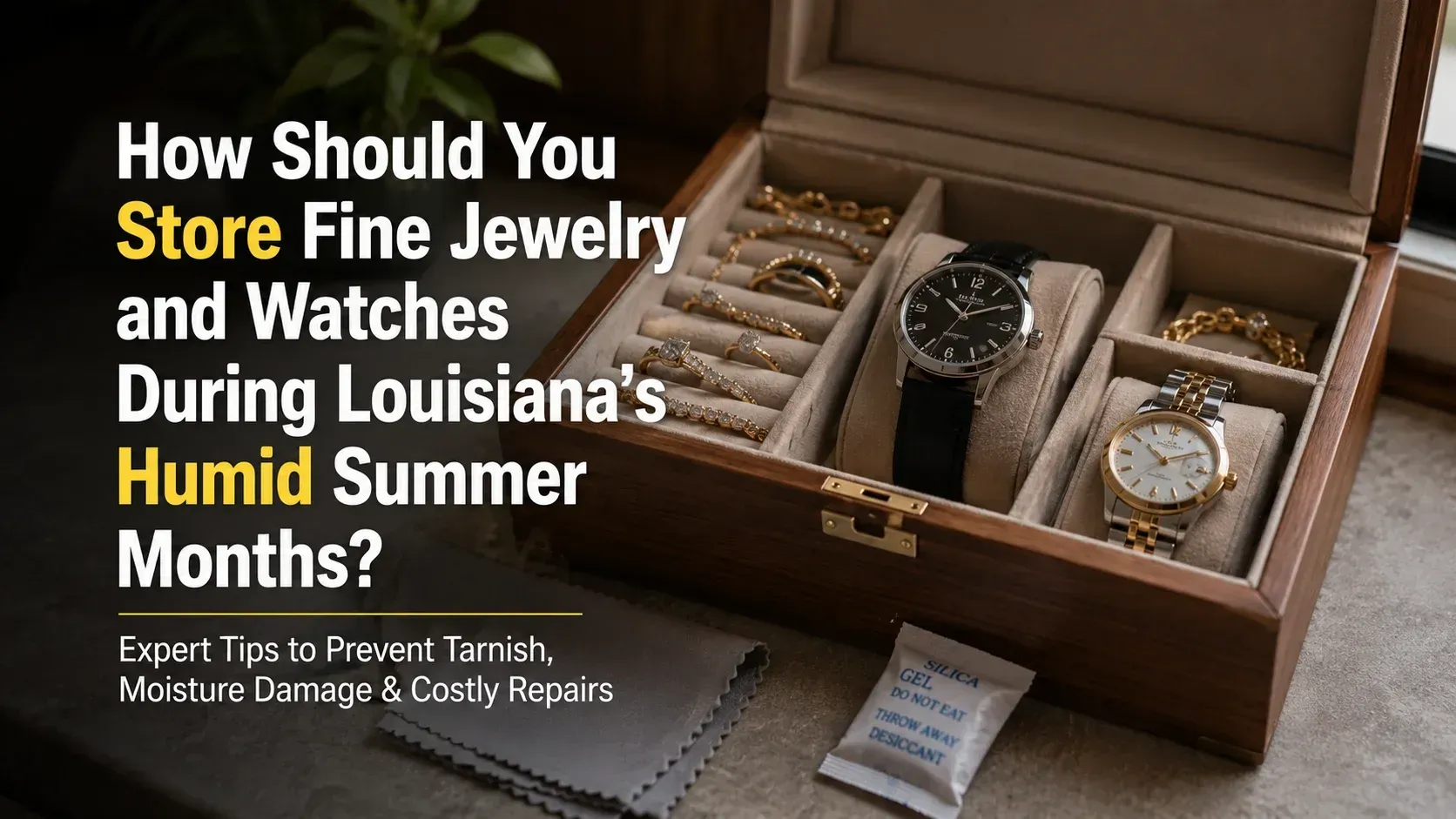
- Silica gel packets absorb ambient moisture inside a closed box. Swap or recharge them every one to two months in summer; many types change color when saturated.
- Anti-tarnish strips absorb the sulfur compounds that blacken silver. They typically last about six months.
- Soft-lined boxes with individual compartments keep pieces from scratching each other and limit air exchange.
- Anti-tarnish cloth bags work well for silver serving pieces and larger items.
Two cautions. First, avoid sealing jewelry in ordinary plastic zip bags for the long term; trapped moisture has nowhere to go, and some plastics off-gas compounds that accelerate tarnish. Purpose-made anti-tarnish bags are the exception. Second, do not store pearls in anything airtight, since they need some air exchange to avoid drying out.
Habits That Do the Rest
Storage supplies only work alongside a few routines. Wipe pieces with a soft cloth before putting them away, because skin oils, sweat, sunscreen, and perfume all hold moisture against metal. Summer in Louisiana means more of all four.
Take jewelry off before swimming or yard work. Pool chlorine attacks gold alloys, and sweat is mildly corrosive salt water.
Finally, look at your stored pieces every month or two rather than leaving them sealed away all season. Early tarnish wipes off in seconds; a summer's worth takes professional polishing. For valuable or inherited items, having a qualified gemologist check settings and watch seals periodically catches small problems while they are still small.
Conclusion
Louisiana humidity damages jewelry and watches through steady moisture exposure and daily condensation cycles, and the harm shows up as tarnish, corroded settings, flaking plate, and moisture inside watch cases. The defense is straightforward: climate-controlled interior storage, closed cases with fresh desiccant or anti-tarnish strips, pieces separated and wiped clean before they go in, and watches kept sealed with their crowns down.
None of this requires expensive equipment. It requires knowing how moisture reaches your pieces and closing off those paths, then checking in now and then instead of assuming a closed drawer is a safe one. Informed care over one humid summer preserves both the look of a piece and what it is worth.
Worried the Summer Has Already Gotten to Your Pieces?
If something in your collection has tarnished, fogged, or changed since spring, it helps to know what you are dealing with before deciding on cleaning, repair, or sale. We are happy to take a look and explain what we see, with no obligation attached. Contact us at Acadiana Gold Exchange in Lafayette, LA, and get a clear read on the condition and value of your jewelry and watches.
Frequently Asked Questions
What humidity level is safe for jewelry storage?
Most conservators suggest keeping relative humidity below about 50 percent for metal objects. Typical air-conditioned rooms in Louisiana run higher than that in summer, which is why closed boxes with silica gel are a useful second layer.
Does tarnish permanently damage silver jewelry?
Usually not. Tarnish is a surface film that polishing removes, though each polish takes off a tiny amount of silver. Heavy, long-neglected tarnish can pit the surface, and repeated aggressive polishing wears down plated items and fine details.
Can humidity damage a water-resistant watch?
Yes. Water resistance depends on gaskets that degrade over three to five years, and ratings assume the seals are intact. An older watch with dried gaskets can let humid air inside during normal wear, so periodic pressure testing matters more in this climate.
Is it safe to store jewelry in plastic bags?
Ordinary zip bags are risky for long-term storage because they trap whatever moisture goes in with the piece, and some plastics give off compounds that speed tarnish. Anti-tarnish bags made for jewelry are designed for the job and are a better choice for silver.
Where should I keep jewelry during a hurricane evacuation?
A small lockable case that travels with you in the passenger cabin is generally safer than leaving pieces in a hot vehicle trunk or an unpowered house. A bank safe deposit box is another option if you plan ahead of the storm.
Do I need a dehumidifier for jewelry storage?
Not usually for a typical collection. A closed box with fresh silica gel inside an air-conditioned room handles most situations. Dehumidifiers make sense for large collections, safes in marginal spaces, or rooms that stay above roughly 60 percent humidity.
How often should watches be serviced in a humid climate?
Most manufacturers suggest service every four to six years, and gasket checks or pressure tests more often than that. In a Gulf Coast climate, erring toward the shorter end of those intervals is reasonable, especially for watches worn daily in summer.
Frequently Asked Questions
What humidity level is safe for jewelry storage?
Most conservators suggest keeping relative humidity below about 50 percent for metal objects. Typical air-conditioned rooms in Louisiana run higher than that in summer, which is why closed boxes with silica gel are a useful second layer.
Does tarnish permanently damage silver jewelry?
Usually not. Tarnish is a surface film that polishing removes, though each polish takes off a tiny amount of silver. Heavy, long-neglected tarnish can pit the surface, and repeated aggressive polishing wears down plated items and fine details.
Can humidity damage a water-resistant watch?
Yes. Water resistance depends on gaskets that degrade over three to five years, and ratings assume the seals are intact. An older watch with dried gaskets can let humid air inside during normal wear, so periodic pressure testing matters more in this climate.
Is it safe to store jewelry in plastic bags?
Ordinary zip bags are risky for long-term storage because they trap whatever moisture goes in with the piece, and some plastics give off compounds that speed tarnish. Anti-tarnish bags made for jewelry are designed for the job and are a better choice for silver.
Where should I keep jewelry during a hurricane evacuation?
A small lockable case that travels with you in the passenger cabin is generally safer than leaving pieces in a hot vehicle trunk or an unpowered house. A bank safe deposit box is another option if you plan ahead of the storm.
Do I need a dehumidifier for jewelry storage?
Not usually for a typical collection. A closed box with fresh silica gel inside an air-conditioned room handles most situations. Dehumidifiers make sense for large collections, safes in marginal spaces, or rooms that stay above roughly 60 percent humidity.
How often should watches be serviced in a humid climate?
Most manufacturers suggest service every four to six years, and gasket checks or pressure tests more often than that. In a Gulf Coast climate, erring toward the shorter end of those intervals is reasonable, especially for watches worn daily in summer.
Related Posts