Can You Sell a Watch Without the Original Box?
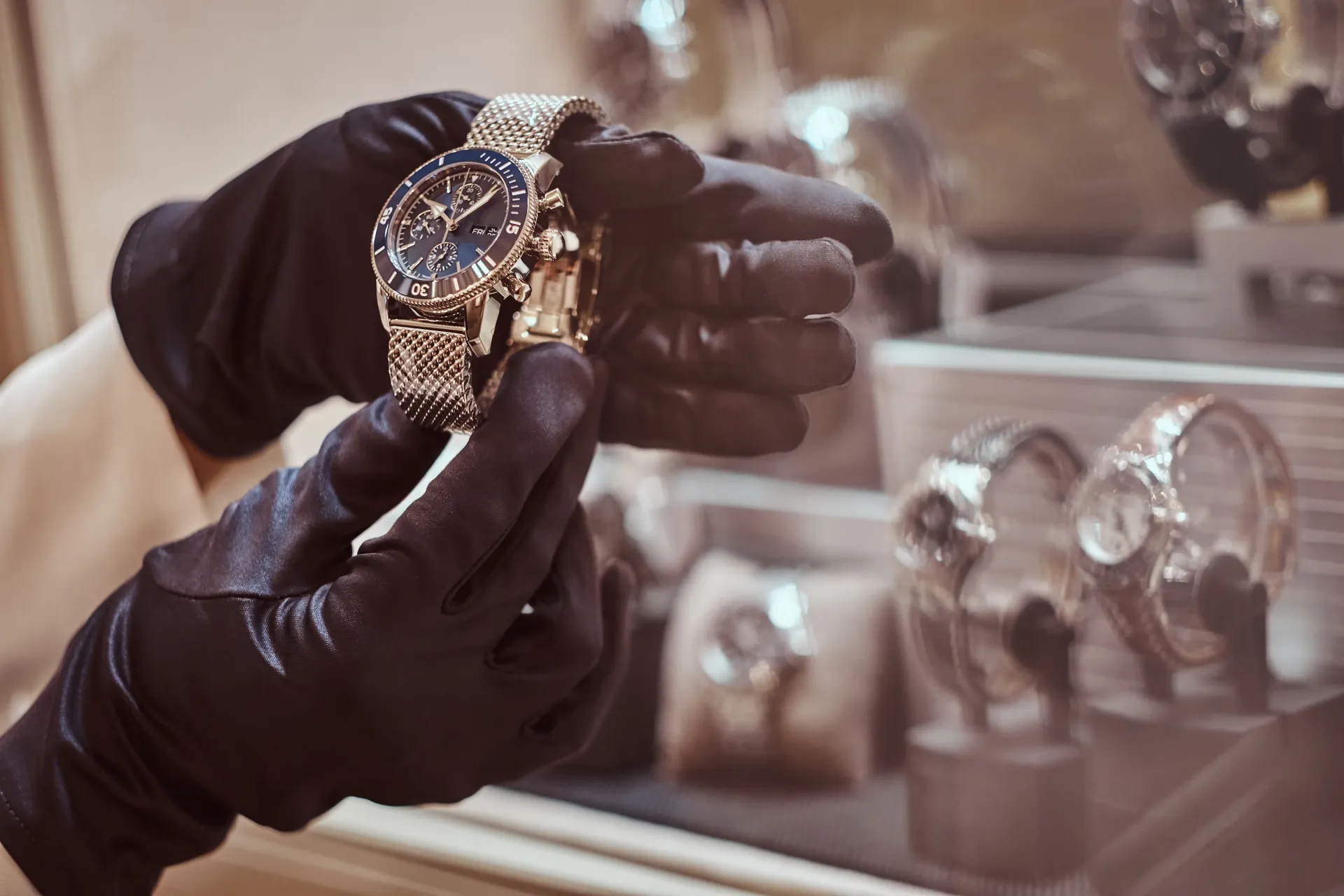
Table of Contents
- Introduction
- Understanding the Problem
- How Watch Buyers Evaluate a Timepiece
- Benefits of Getting a Professional Evaluation
- Related Insights and Resources
- Common Mistakes to Avoid
- When Should You Speak With a Professional?
- Conclusion
- Frequently Asked Questions
Key Takeaways
- Yes, you can sell a watch without the original box or papers, though it may affect the offer compared to a complete set.
- The watch itself — its condition, movement, and authenticity — is usually the biggest factor in determining value.
- Missing boxes, papers, or links can reduce resale value somewhat, but rarely make a watch unsellable.
- Buyers typically assess condition, function, and authenticity in person rather than relying on paperwork alone.
- A professional evaluation can clarify what a specific watch is worth, with or without its original accessories.
Introduction
You can sell a watch without the original box, and while missing accessories may have some effect on the final offer, the watch itself usually remains the main factor in its value — something a professional watch evaluation can clarify based on the specific piece. Pairing this with an understanding of gold purity if the watch case or band involves gold can also help set realistic expectations.
Plenty of watch owners across Lafayette have a timepiece tucked away — inherited, gifted, or simply forgotten in a drawer — without the box, papers, or extra links it originally came with. This article looks at how that affects resale value, what buyers typically focus on instead, and what to expect from a professional evaluation.
Understanding the Problem
Common Customer Concerns
People considering selling a watch without its original packaging often have similar questions:
- "Will not having the box mean we get a lowball offer?"
- "Does it matter that we don't have the original papers or warranty card?"
- "Is the watch even worth selling without all the extras?"
- "What if we've lost the links that came with the band?"
- "Will buyers think the watch isn't authentic without the box?"
Why the Box and Papers Matter (Sometimes)
For certain luxury watches, especially those from well-known brands, a complete set — meaning the watch, box, papers, and any extra links or accessories — can sometimes command a premium among collectors. This is particularly true in the high-end collector market, where completeness can be part of what makes a piece desirable.
Why It Doesn't Always Matter as Much as Expected
For most watches — including many luxury pieces — the watch itself is the primary driver of value. A box is, after all, just a box. What matters more is whether the watch functions correctly, what condition the case, crystal, and band are in, and whether the watch can be authenticated through its movement, serial numbers, and overall construction.
How Watch Buyers Evaluate a Timepiece
The Process
A typical watch evaluation involves:
- Visual inspection – Checking the case, crystal, dial, and band for wear, damage, or signs of repair.
- Authentication – Verifying the watch against known characteristics of the brand and model, including movement type and serial numbers where applicable.
- Functional testing – Confirming the watch runs accurately and that functions (chronograph, date, etc.) work as expected.
- Market research – Comparing the watch to current resale values for similar models in similar condition.
Approach and Key Considerations
Authentication doesn't rely on the box or papers — it comes from examining the watch itself. Experienced evaluators are familiar with the construction, movements, and details of various brands and models, which allows them to assess authenticity directly.
Industry Best Practices
A thorough evaluation typically includes opening the case (where appropriate) to inspect the movement, testing timekeeping accuracy over a short period, and researching recent sale prices for comparable watches in similar condition. Being upfront about how missing accessories factor into an offer — rather than treating it as an automatic deduction — is part of a transparent process.
Benefits of Getting a Professional Evaluation
Clarity on Actual Value
Rather than guessing whether a missing box makes a watch "worth less," a professional evaluation provides a clearer picture based on the watch itself.
Realistic Expectations
Understanding what factors actually influence value — condition, function, authenticity, brand, and current demand — helps set expectations before deciding whether to sell.
Convenience
An evaluation can often be done in a single visit, without needing to track down old paperwork or accessories first.
No Pressure to Sell
A professional evaluation simply provides information. It doesn't commit you to selling, which can be helpful if you're still deciding what to do with a piece.
Peace of Mind on Authenticity
For inherited or gifted watches where the original purchase details are unknown, an evaluation can help confirm whether a watch is genuine, which is often a bigger concern for owners than the missing box.
Related Insights and Resources
If your watch has a gold case or band, it may also be worth reading about 14k vs 18k gold and how purity affects value, since this can be relevant alongside the watch's brand and condition.
Maintenance Tips Before Selling
- Avoid attempting repairs yourself before an evaluation, as this can sometimes affect authenticity assessments.
- If you do have any papers, even partial ones (service records, old receipts), it doesn't hurt to bring them along.
- Keep the watch in a safe, dry place until you're ready for an evaluation, to avoid further wear.
- If the watch hasn't been worn in years, don't worry about getting it running again first — this can be assessed during evaluation.
Common Misconceptions
A common misconception is that a missing box means a watch can't be authenticated. In most cases, authentication comes from the watch itself rather than its packaging. Another misconception is that all watches without a complete set are significantly devalued — for many watches, the difference is relatively minor compared to factors like condition and brand.
Common Mistakes to Avoid
- Assuming a missing box makes a watch unsellable. In most cases, it simply doesn't.
- Attempting DIY repairs before selling. This can sometimes affect both function and assessed value.
- Not mentioning any partial documentation you do have. Even incomplete records can sometimes be useful context.
- Overestimating the impact of missing links or bands. These are often replaceable and rarely a dealbreaker.
- Selling without an evaluation. Without one, it's hard to know whether an offer reflects the watch's actual value.
When Should You Speak With a Professional?
It may be worth arranging an evaluation if:
- You have a watch you're considering selling, regardless of whether you have the original box or papers.
- You're unsure whether a watch is authentic or simply curious about its background.
- The watch hasn't been worn in years and you're wondering whether it's still functional.
- You've inherited a watch and don't have any information about its history or value.
- You want a clearer picture of value before deciding what to do with the piece.
An evaluation is a low-pressure way to get information, whether or not you decide to sell afterward.
Conclusion
The difference between 14k and 18k gold comes down to purity, with 18k generally containing more pure gold and carrying a higher value per gram, while 14k offers added durability that suits everyday wear. Neither is universally "better" — it depends on the piece, how it's worn, and what matters most to the person buying or selling. Understanding these basics makes it easier to approach buying or selling gold jewelry with realistic expectations.
Considering Selling a Watch?
If you have a watch tucked away — with or without the original box — our team is happy to take a look and talk through what we find. Reach out via email at naaserus@yahoo.com or call 337-534-0039 to ask questions or arrange an evaluation.
Frequently Asked Questions
Will we get less for our watch if we don't have the box or papers?
It may have some effect for certain collector pieces, but the watch's condition, function, and authenticity are usually the bigger factors.
Can our watch still be authenticated without paperwork?
Yes, authentication is typically based on the watch itself, including its movement, construction, and serial numbers.
What if our watch hasn't worked in years?
A non-functioning watch can still be evaluated, and whether it can be serviced or what it's worth as-is can be discussed during an evaluation.
Do we need to bring anything with the watch for an evaluation?
Just the watch is fine, though any partial documentation or accessories you do have can be brought along too.
Is getting an evaluation the same as agreeing to sell?
No, an evaluation simply provides information about the watch, with no obligation to sell.
Related Posts