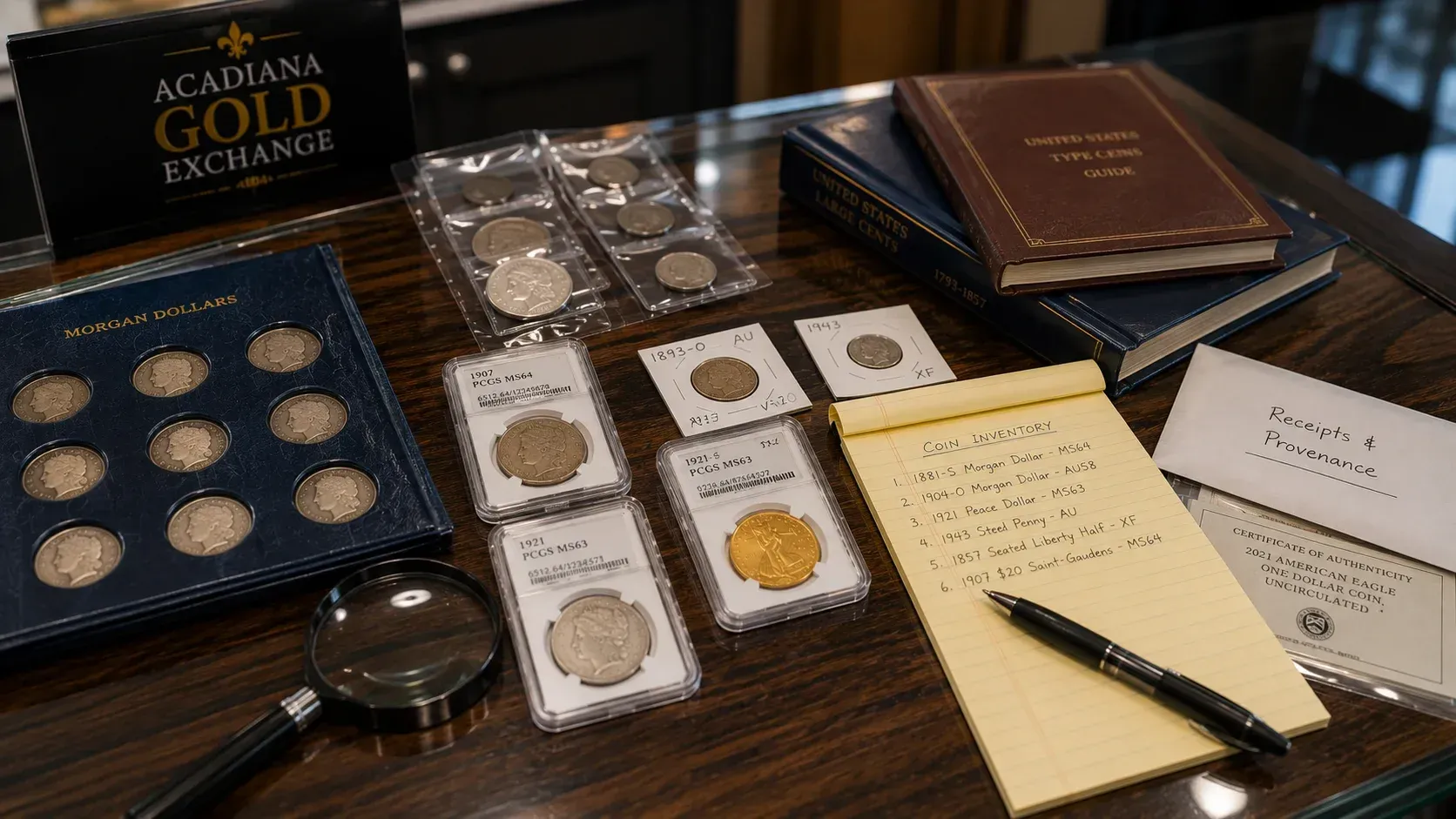
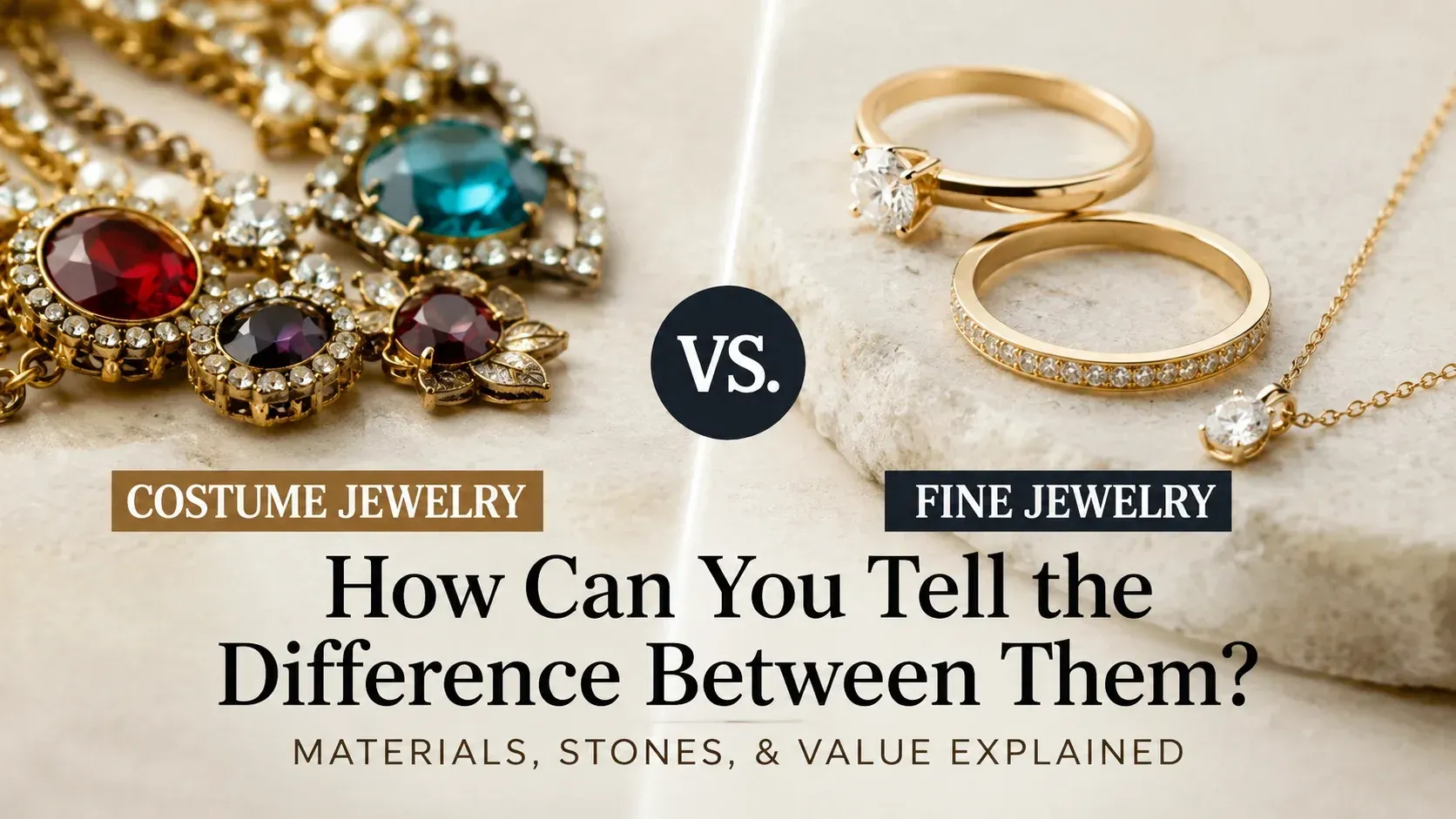
How Can You Tell the Difference Between Costume Jewelry and Fine Jewelry?
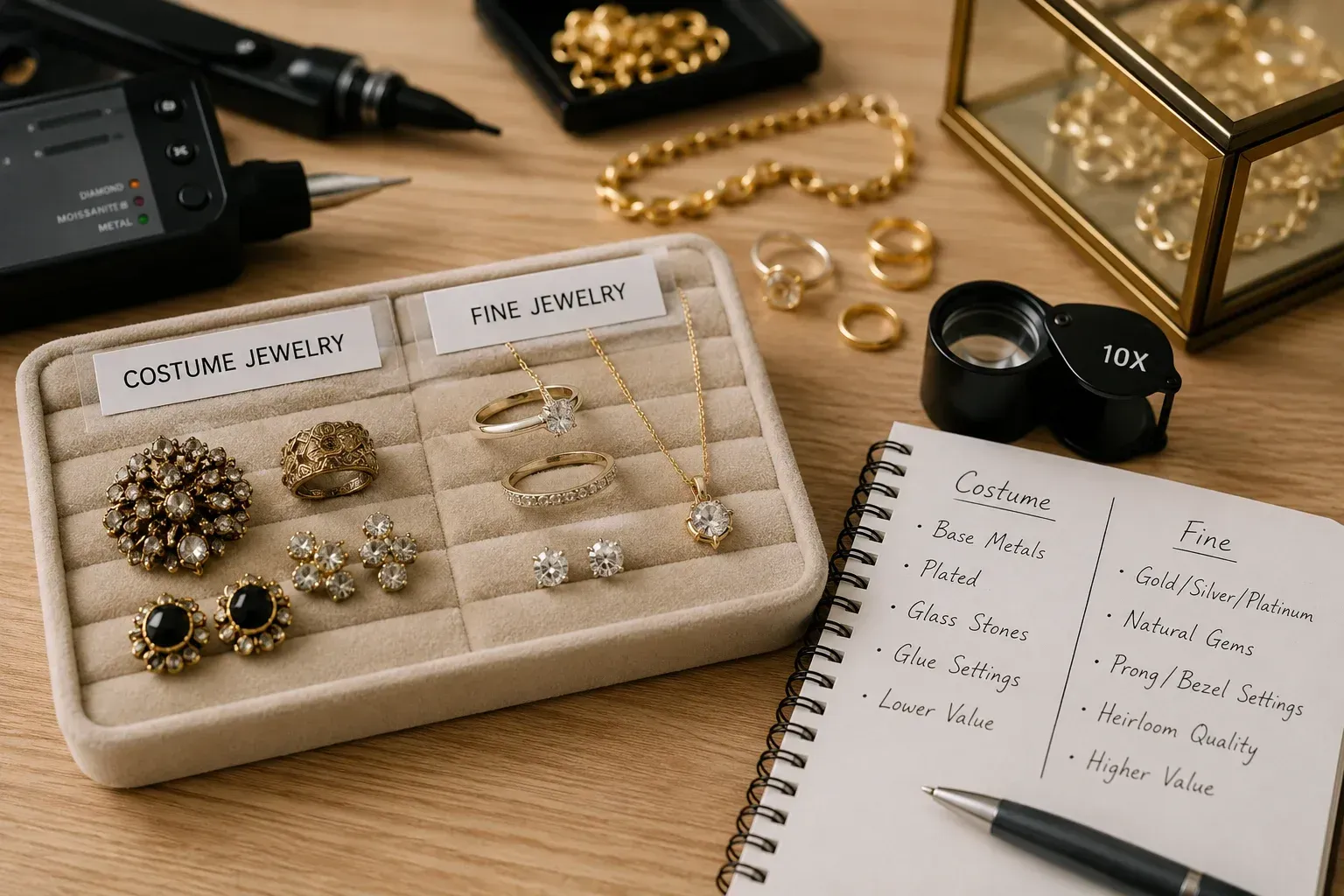
Table of Contents
- What Counts as Fine Jewelry?
- What Counts as Costume Jewelry?
- Metal Markings: The First Thing to Check
- Gemstones: Natural, Lab-Grown, or Simulated
- Construction and Craftsmanship
- How Each Type Ages Over Time
- Why Value Differs So Much Between the Two
- Simple Checks You Can Do at Home
- Conclusion
Key Takeaways
- Fine jewelry is made from precious metals such as gold, platinum, and sterling silver, while costume jewelry uses base metals with plating or coatings.
- Metal markings like 14K, 18K, 925, or PLAT are one of the most reliable ways to identify fine jewelry, though markings alone are not proof.
- Fine jewelry uses natural or lab-grown gemstones set in prongs or bezels. Costume jewelry usually relies on glass, crystal, or plastic stones held in place with glue.
- Costume jewelry can be well made and collectible, but it rarely carries material value. Fine jewelry holds value in its metal and stones even when styles change.
- A professional evaluation is the only dependable way to confirm what a piece is made of, especially with older or inherited jewelry.
Introduction
The difference between costume jewelry and fine jewelry comes down to what the piece is made of. Fine jewelry uses precious metals such as gold, platinum, and sterling silver, often set with natural or lab-grown gemstones, while costume jewelry uses base metals, plating, and simulated stones designed to imitate the real thing.
That distinction matters more than most people realize. Business owners handle jewelry in all sorts of situations: liquidating estate inventory, accepting trade-ins, sorting through inherited pieces, or deciding what to insure. Knowing which category a piece falls into changes how you store it, insure it, and price it.
The good news is that the two types leave different clues. Metal markings, stone settings, weight, and even the clasps tell you a lot before an expert ever looks at the piece. At Acadiana Gold Exchange, the range of items we buy in Lafayette runs from scrap gold to estate diamonds, and the same identification basics apply to all of it.
This guide walks through those basics so you can sort jewelry with more confidence.
What Counts as Fine Jewelry?
Fine jewelry is built from precious metals: gold of at least 10 karats, platinum, palladium, or sterling silver. The metal runs through the entire piece rather than sitting on the surface as a coating.
Stones in fine jewelry are natural gemstones or lab-grown equivalents. Diamonds, sapphires, rubies, and emeralds are the classic examples, but semi-precious stones like amethyst or topaz also appear in fine pieces when set in precious metal.
Because the materials have value on their own, fine jewelry is usually made to be repaired, resized, and passed down. A jeweler can re-tip a worn prong on a gold ring. That is rarely worth doing with a plated piece.
What Counts as Costume Jewelry?
Costume jewelry, sometimes called fashion jewelry, is made from base metals such as brass, copper, nickel, or zinc alloys. Many pieces carry a thin layer of gold or silver plating over that base.
The stones are typically glass, acrylic, resin, cubic zirconia, or crystal. Rhinestones are the most familiar example. These materials can look convincing, especially when new, but they are chosen for appearance and price rather than lasting value.
None of this makes costume jewelry junk. Signed vintage pieces from makers like Trifari or Miriam Haskell have real collector followings. The point is that its worth comes from design and rarity, not from the materials themselves.
Metal Markings: The First Thing to Check
Flip the piece over and look for stamps. Fine jewelry is almost always marked, usually on the inside of a ring band, the clasp of a chain, or the back of a pendant.
Common markings include:
- 10K, 14K, 18K, or 22K for gold, sometimes written as 417, 585, 750, or 916
- 925 or "Sterling" for sterling silver
- PLAT, PT950, or 950 for platinum
Costume jewelry carries different tells. Stamps like "GP" (gold plated), "GF" (gold filled), "HGE" (heavy gold electroplate), or a maker's name with no purity mark point toward a fashion piece. Silver-colored items are a common source of confusion, and it helps to know how to tell sterling or plated silver apart before assuming either way.
One caution: markings can be faked, and old or worn pieces sometimes lose theirs. A stamp is a strong clue, not a verdict. Testing by a professional confirms what a stamp only suggests.
Gemstones: Natural, Lab-Grown, or Simulated
Stones give away a lot if you know what to look for. Natural gemstones usually contain small internal marks called inclusions. A stone that looks flawless under magnification, especially a large one on an inexpensive piece, is often glass or cubic zirconia.
Temperature is another clue. Real diamonds and most natural gems feel cool against the skin and warm up slowly. Glass and plastic reach body temperature almost immediately.
Facets matter too. Genuine cut stones have crisp, sharp facet edges. Molded glass and plastic stones tend to have slightly rounded, soft edges where the mold released. Learning the types of gems and their traits makes these differences easier to spot.
Keep in mind that lab-grown diamonds and sapphires are chemically real. They belong in the fine jewelry category even though they cost less than mined stones.
Construction and Craftsmanship
How a stone is held in place says as much as the stone itself. Fine jewelry secures stones with metal prongs, bezels, or channels that were cut and shaped by hand or precision machine. Look closely and you can see the metal gripping the stone.
Costume jewelry usually glues stones into shallow cups. If you can see adhesive residue around a stone, or if a stone sits flat in its setting with no metal wrapping over its edge, you are probably looking at a fashion piece.
Weight is worth noting as well. Gold and platinum are dense. A fine ring feels heavier than its size suggests. Base metal pieces often feel light or hollow, though some costume makers add weight on purpose, so treat this as one clue among several.
Check the small parts too. Solid clasps, smooth hinges, and clean solder joints point to fine work. Rough seams, pitting, and flaking finishes point the other way.
How Each Type Ages Over Time
Time is honest with jewelry. Solid gold does not tarnish or flake. Sterling silver tarnishes but polishes back to full shine because the metal is the same all the way through.
Plated jewelry wears differently. The thin surface layer rubs away at contact points such as ring edges and clasp loops, exposing the darker or yellower base metal underneath. Green or black skin discoloration after wear usually means copper or nickel content, which is another costume signal.
Simulated stones cloud and scratch over the years, while natural stones like sapphire and diamond stay bright. If an older piece still has crisp, clear stones and even color across the metal, that durability itself is evidence of quality.
Why Value Differs So Much Between the Two
Fine jewelry has two layers of value. The first is intrinsic: the gold, platinum, or silver content and the stones can be weighed, tested, and priced against current market rates. The second is added value from brand, age, condition, and design.
Costume jewelry generally has only the second layer. A plated brass necklace has almost no material value, so its price depends entirely on demand for that maker, era, or style. Some vintage costume pieces do sell well to collectors, but most do not.
This is why two necklaces that look nearly identical can differ in value by a hundred times. It is also why testing matters before any sale. Metal purity and stone identity change the math completely, and neither can be confirmed by appearance alone.
Simple Checks You Can Do at Home
A few low-risk checks can help you sort a mixed batch of jewelry:
- Read every marking with a magnifying glass, including clasps and inner bands.
- Hold a magnet near the piece. Gold, silver, and platinum are not magnetic. A strong pull means base metal, though no pull does not prove precious metal.
- Look for wear points. Color changes at edges and high spots suggest plating.
- Inspect the settings. Glue means costume; prongs and bezels lean fine.
- Feel the weight and temperature. Dense, cool pieces lean toward fine jewelry.
These checks narrow things down, but they have limits. Gold-filled pieces pass the magnet test. Some fakes carry convincing stamps. When money is on the line, professional testing with acid, electronic testers, or X-ray fluorescence gives you an answer instead of a guess.
Conclusion
Costume jewelry and fine jewelry differ in materials, construction, and how they hold value. Fine jewelry is solid precious metal with natural or lab-grown stones, built to be repaired and kept. Costume jewelry is base metal with plating and simulated stones, made to follow fashion at an accessible price.
Markings, settings, weight, and wear patterns let you make a reasonable first judgment on your own. For anything that might carry real value, though, verified testing is the responsible step before you buy, sell, insure, or divide pieces among family. An informed decision starts with knowing exactly what you have.
Not Sure What's Sitting in Your Jewelry Box?
If you have pieces you cannot quite place, whether from an estate, a trade-in, or years of collecting, a straightforward evaluation can settle the question. There is no obligation and no pressure to sell.
Contact us at Acadiana Gold Exchange in Lafayette, LA, and we will help you understand what you have so you can decide what to do with it on your own terms.
Is costume jewelry worth anything?
Sometimes. Most costume jewelry has little resale value, but signed vintage pieces from well-known designers can be collectible. Its worth comes from rarity and demand rather than the materials, since the metals and stones themselves have minimal value.
Does a stamp like 14K guarantee that a piece is real gold?
No. Stamps are a strong indicator, but counterfeit markings exist and some plated items are stamped misleadingly. Professional testing is the only way to confirm metal content with certainty.
Is gold-plated jewelry considered fine jewelry?
No. Gold-plated and gold-tone pieces have a thin layer of gold over base metal, which places them in the costume category. Gold-filled jewelry contains more gold than plating but is still not classified as fine jewelry.
Are lab-grown diamonds fine jewelry or costume jewelry?
Lab-grown diamonds are chemically and physically the same as mined diamonds, so pieces that set them in precious metal count as fine jewelry. Cubic zirconia and moissanite, by contrast, are diamond simulants.
Why does my jewelry turn my skin green?
Green or black discoloration usually comes from copper or nickel in base metal reacting with skin oils and moisture. Solid gold, platinum, and sterling silver rarely cause this, so discoloration often signals a plated or costume piece.
Frequently Asked Questions
Related Posts