What Happens to Items That Don't Sell at an Estate Sale?
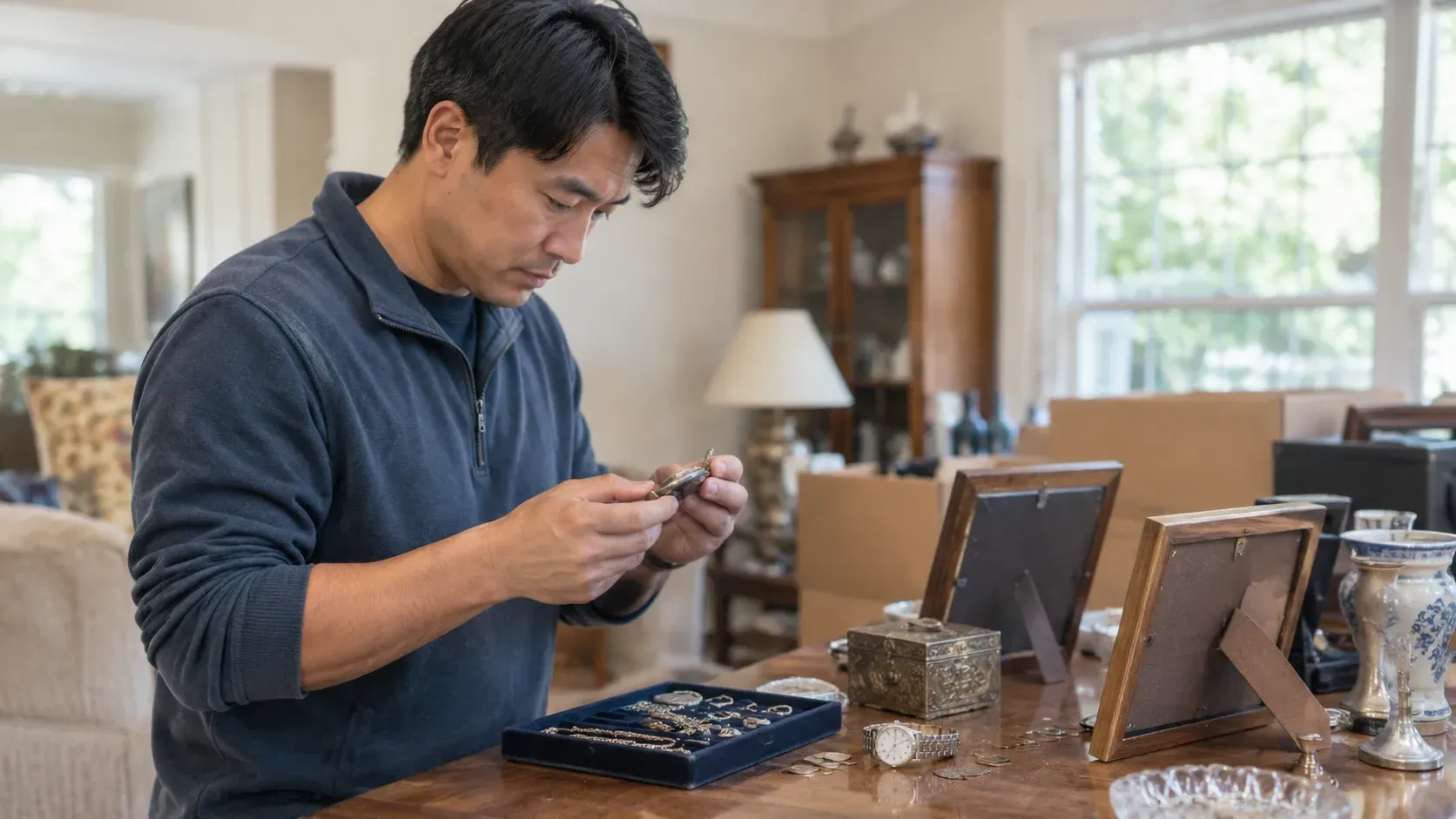
Table of Contents
- What Happens to Unsold Estate Sale Items
- Four Paths for Estate Sale Leftover Items
- Buy-Back: When We Buy the Unsold Items Ourselves
- Consignment: The Slower Route That Often Pays More
- Donation, and the Paperwork Worth Keeping
- Why Estate Sale Items Go Unsold in the First Place
- Conclusion
- Have Items Left Over? Let Us Look Before Anything Goes.
- Frequently Asked Questions
Key Takeaways
- Nothing gets abandoned in the house. Every remaining item goes somewhere, by agreement.
- There are four usual paths: consignment, buy-back, donation, or a custom arrangement.
- Decide the plan before the sale, not after. Deciding while standing in a half-empty room is harder.
- Leftovers are not a sign the sale failed. Even strong sales leave things behind.
- The highest-value leftovers are often the ones worth the most patience.
Introduction
Items that do not sell at an estate sale go one of four ways: you keep them, we buy them outright, you sell on consignment, or they go to donation. Our own page puts it plainly. For anything that remains, we offer options such as consignment, buy-back, donation, or another solution we agree on together.
What nobody tells you is that the leftovers are normal. Every sale has them. The families who handle the end well are the ones who decided what happens to the leftovers before the first person walked in the door.
What Happens to Unsold Estate Sale Items
They get sorted into categories, and each category has a destination.
By the last afternoon of a sale, what is left usually falls into three buckets:
- Things with real resale value that simply did not meet the right buyer. Jewelry, coins, a watch, a piece of furniture somebody will want next month.
- Things with modest value and a thin local market. Serviceable, decent, but not what this weekend's crowd came for.
- Things with sentimental value and little market value. Papers, photographs, everyday household goods.
Those three buckets want three different answers. Lumping them together is how people either donate something valuable or spend six months storing something worth very little.
Four Paths for Estate Sale Leftover Items
Here is the full menu, and the honest case for each.
| Path | Best for | What it asks of you |
|---|---|---|
| Keep it | Anything family may still want | A conversation before the sale, not after |
| Buy-back | Precious metals, coins, jewelry, watches | Nothing. You are paid at the time |
| Consignment | Higher-value items that need the right buyer | Patience while the item finds its market |
| Donation | Household goods with little resale market | Keeping the receipt |
Most families end up using two or three of these, not one. A single estate rarely sorts neatly.
Buy-Back: When We Buy the Unsold Items Ourselves
If what is left sits in our wheelhouse, we will make you an offer on the spot.
That wheelhouse is specific. What we buy is gold and silver jewelry, diamonds, luxury watches, bullion, and collectible and numismatic coins. Offers on gold and silver are based on the current spot price, which moves daily, so the number we can give you this week is not necessarily the number from last month.
Why families choose this: it is finished. Payment happens, the item leaves, nothing goes into storage, and nobody has to drive back out here.
Why some families do not: a piece with collector interest beyond its metal content can do better with time and the right buyer. We will say so when that is the case. A rare coin sold for its melt value is a loss, and we would rather tell you that than take it.
One warning that costs people real money. Do not clean coins before bringing them in. Cleaning can cut the value of a collectible coin substantially, and it cannot be undone. Dull and original beats shiny and scrubbed every time.
Consignment: The Slower Route That Often Pays More
Consignment means the item stays for sale after the estate sale ends, listed to reach a wider audience than one weekend in Lafayette can.
For the right item, the math is better. A weekend sale reaches whoever drives over. An eBay listing reaches collectors anywhere. For a watch, a piece of fine jewelry, or a coin with genuine collector demand, that difference is not small.
The terms are straightforward. You pay nothing until your items sell. We draft a contract that outlines the terms and lists the items, and sellers are paid after the item has sold and payment has been processed. For larger items we will come to you to photograph and list them, and a fee may apply based on distance, time and effort for those on-location services.
The tradeoff is time. Consignment is weeks or months, not an afternoon. If the estate needs closing quickly, that matters.
Donation, and the Paperwork Worth Keeping
Donation handles what the resale market does not want, which is more than people expect.
Household goods, furniture in fair condition, clothing, books. Local organizations around Acadiana take these and they go to use. If you itemize on your taxes, get a receipt at the time of the donation, because reconstructing the list afterward is miserable and less convincing.
One caution. Donate last, not first. We have seen a piece of costume jewelry go into a donation box that turned out to be fine jewelry, and the difference between the two is not always visible across a room. Have the jewelry looked at before it goes anywhere.
We are not tax advisors, so what any donation does for your return is a question for your accountant.
Why Estate Sale Items Go Unsold in the First Place
Most unsold estate sale items end up that way for one of three ordinary reasons. None of them means the sale went badly.
- Price and patience. Strategic pricing aims at getting the most for the assets, and an item priced for its real value sometimes waits for a buyer who recognizes it.
- Volume. A full house holds more than any single weekend of shoppers will absorb. That is arithmetic, not failure.
- Category. Some things have a deep local market and some have a narrow national one. Narrow-market items are exactly the ones consignment exists for.
If you are earlier in this than you think, planning the sale with the leftovers already in mind makes the last day far less stressful. And if you are weighing what the whole thing costs, our breakdown of estate sale costs covers the fee side.
Conclusion
Decide the leftover plan during the consultation, while everybody is calm and nothing is urgent. Pick which categories go to buy-back, which are worth consigning, and which are headed for donation, and the last day of the sale becomes a short conversation instead of a decision made standing in an empty dining room. Have anything that might be jewelry or coins looked at before it leaves the house. That one step is where families most often leave money behind.
Have Items Left Over? Let Us Look Before Anything Goes.
Bring in what is left, or call and tell us what you are looking at, and we will tell you honestly which path fits each piece, including when the answer is donation rather than a sale. We are licensed and insured, we are at 5421 Johnston St in Lafayette, and you can have your items evaluated without agreeing to sell them. We are open Monday through Friday from 10am to 6pm and Saturday from 10am to 3pm. Call (337) 534-0039 or talk to us first, so we can explain the evaluation process and let you know whether an appointment makes sense for what you have. For anything still being planned, our post-sale options are set during the consultation.
Frequently Asked Questions
What happens to items that don't sell at an estate sale?
They go to consignment, buy-back, donation, or another arrangement agreed on with the family. Nothing is left behind in the house. The plan is normally set during the consultation before the sale rather than decided on the last day.
Do estate sale companies buy leftover items?
We buy what falls in our categories: gold and silver jewelry, diamonds, luxury watches, bullion, and collectible coins. Offers on gold and silver follow the current spot price. Items outside those categories are better suited to consignment or donation.
Is it better to consign or sell leftover items outright?
Outright is faster and final. Consignment usually pays more on higher-value pieces that need the right buyer, since online listings reach collectors a single weekend cannot. Choose by how quickly the estate needs to close.
Should I clean coins or jewelry before selling?
No. Cleaning a collectible coin can reduce its value substantially and cannot be reversed. Bring items as they are and let them be evaluated first.
Can I donate what is left over?
Yes, and it is the right answer for household goods with little resale market. Keep the receipt if you itemize, and have anything that could be jewelry or coins evaluated before it goes into a donation box.
Related Posts